
|
 25th March 2005, 07:51 PM
|
#1 |
|
Member
Join Date: Dec 2004
Location: Sint-Amandsberg (near Ghent, Belgium)
Posts: 830
|
 Probably from the Philippines
Just got this knife. I found it on ebay.belgium.
The seller only gave this information : Philippines knife World War II I guess it's from that region, but I'm not sure. The handle is made from wood with a long brass ferule. The blade has a gentle curve with a very sharp edge. It reminds me a bit of the shape of some kind of Indian dagger. The sheath is also made from wood, partly covered with leather and cord. At the top there are two plaited rattan bands. Total length : 33 cm Length of blade : 17,5 Any comments ?  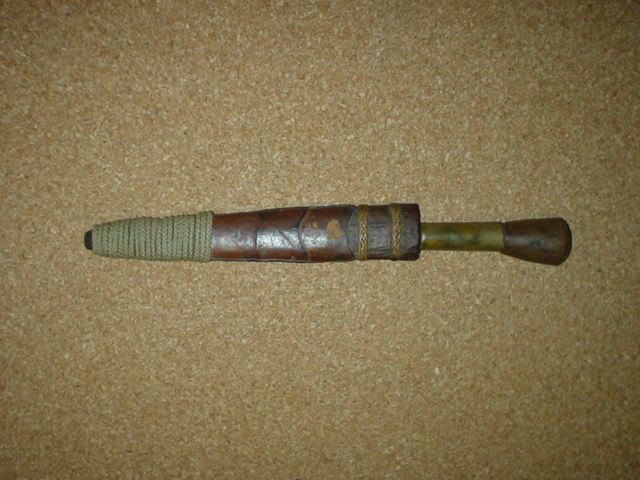 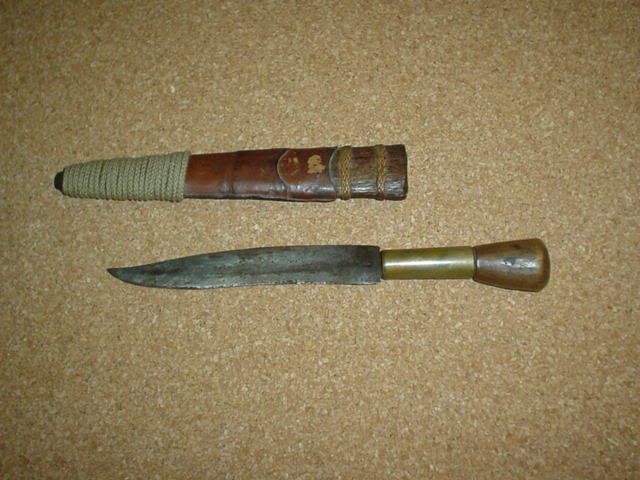 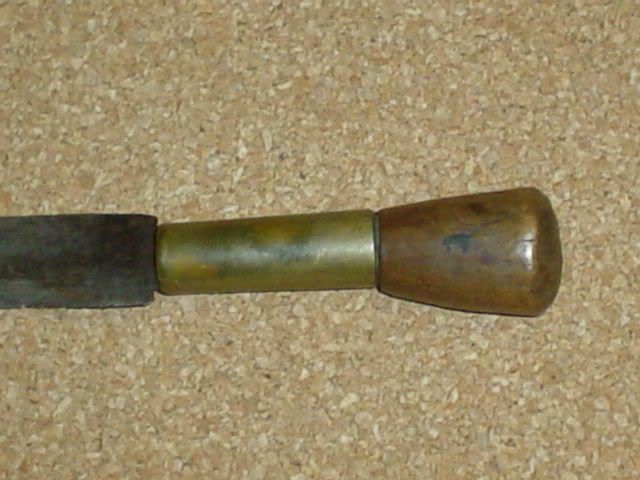 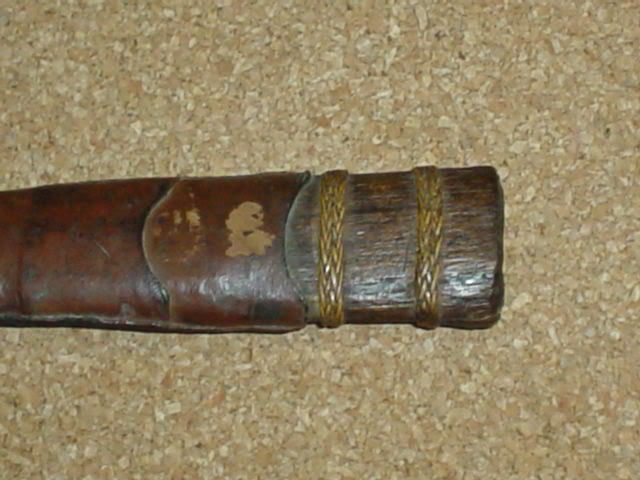 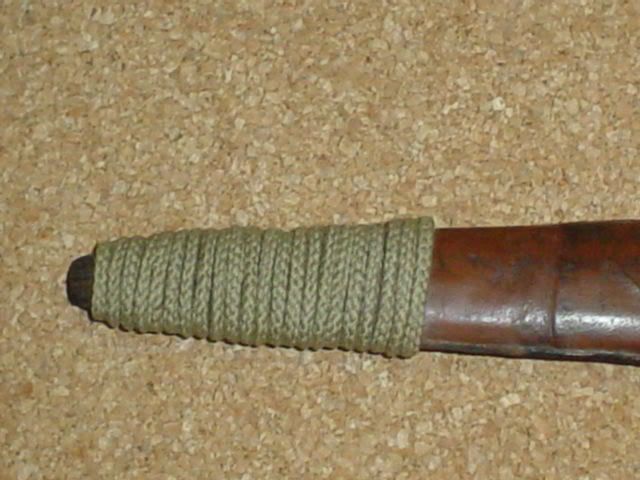 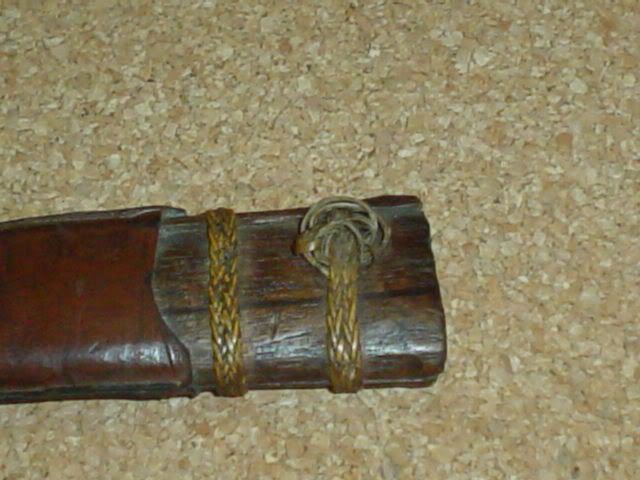
|

|

|
|
25th March 2005, 10:29 PM
|
#2 |
|
Member
Join Date: Feb 2005
Location: Clearwater, Florida
Posts: 371
|

Very nice Freddy.
I've never seen that particular hilt style, particualrly with such a long and exagerated ferule. The scabbard is very similar to that seen on larger Visayan swords, with another of those slightly recurved blades that seem to be popping up all over as of late. My guess would be that it's a turn of the century piece, although it's of a style commonly seen for a period of at least 75 to 100 years, making it hard to be specific in regards to age. Mike |
|
|
|
|
26th March 2005, 04:26 AM
|
#3 |
|
Member
Join Date: Dec 2004
Location: Houston, TX, USA
Posts: 1,254
|
Sheath does have a Visayan look, but the position and style of the stitching seems off; Japanesey? A mult-repaired piece; I do not think this is the original hilt. Looks nonprofessionally made. Looks like a piece of industrial round tubing for the ferule.
|
|
|
|
|
29th March 2005, 06:04 PM
|
#4 |
|
Member
Join Date: Feb 2005
Location: Clearwater, Florida
Posts: 371
|
LOL!
I about lost it when I read your description as "unprofessional" Tom and I fully agree but find that a GOOD thing. Some of the old Negito knives had a decidedly Visayan look to the scabbard, usually out of wood rather than leather as is common in the latter. My guess is that it's a Negrito composite piece with a fair amount of age to it (WWII or earlier) and nothing "Japanesey" **grin** about it at all. Unless I'm mistaken the negritos were the most "unprofessional" as in unskilled in their ironwork of all of the tribal groups, with those accepting the wave theory generally agreeing that they were pushed back further and further by each new incursion. I think the cord wrapped around the tip of the scabbard makes it look newer than it actually is. Mike |
|
|
|
|
29th March 2005, 07:44 PM
|
#5 |
|
Member
Join Date: Dec 2004
Location: Sint-Amandsberg (near Ghent, Belgium)
Posts: 830
|
Hi guys,
Thanks for the comment. You are right in stating that it was made unprofessionally. The blade is crudly made. Still, it's a very functional knife. I don't agree with Tom as to the hilt. I think it is the original one. Look at the picture of this hilt. The top has an almost straight line, but the bottom part has a slight angle. This make the knife fits extremely well in one's hand. But I keep asking myself : Why spend all that trouble in repairing an old scabbard ? Just throw it away and make yourself another one. Apparently, the former owner thought different. There's a split at the back of the scabbard. Probably, the leather was applied to keep the scabbard together. Why cord was used, is a puzzle to me. Here are some more pics : 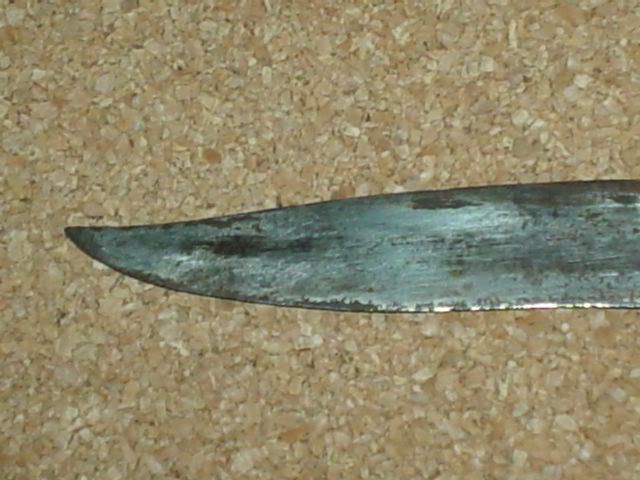 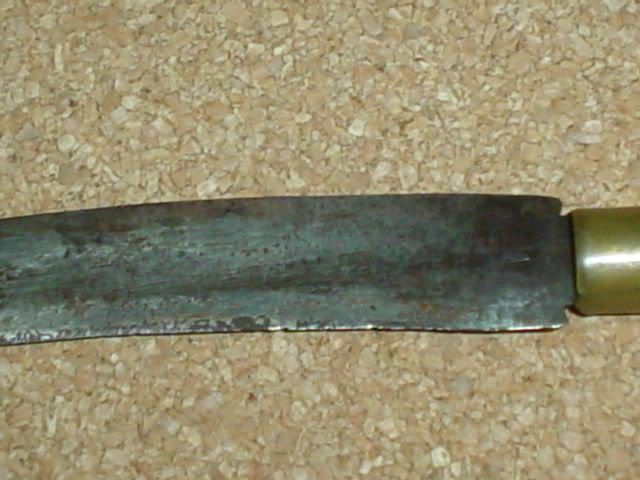 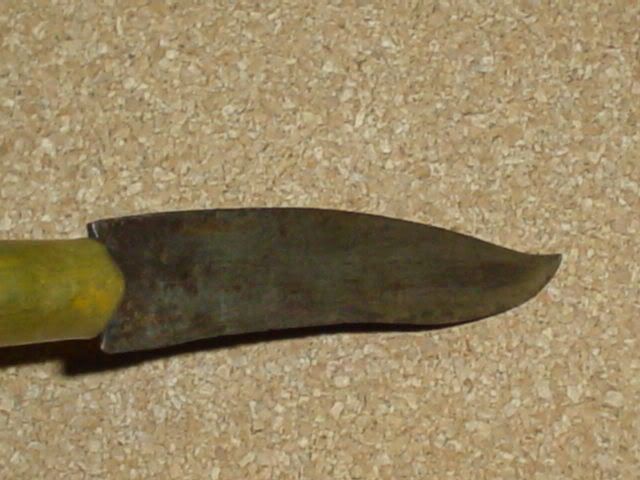 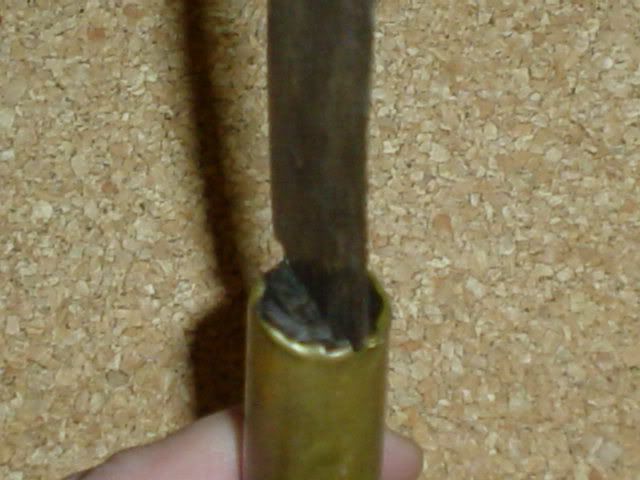 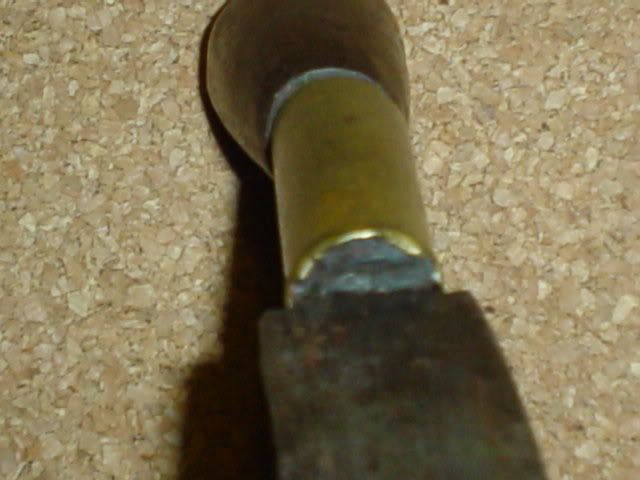
|
|
|
|
|
30th March 2005, 02:50 AM
|
#6 |
|
Member

Join Date: Mar 2005
Posts: 644
|
what are the notches?
I find the notches at the base of the blade curious. Nothing in my admittedly small Philippine collection has this feature. Are they characteristic of Negrito blades? They look like they might be uncomfortable if the blade was used in a thrust. Were they put there to stop the hand from sliding up the blade? Are they be sufficiently large to do so? The blade also seems thinner at the spine than the typical Philippine knife and, on top of that, appears to have a fuller. Why so thin? Is this common in Negrito blades?
|
|
|
|
|
30th March 2005, 04:24 AM
|
#7 |
|
Vikingsword Staff

Join Date: Dec 2004
Location: The Aussie Bush
Posts: 4,736
|
I think this is a "trench knife" from WW II.
The hilt seems to have been made for the blade, but is not "culturally" appropriate for that blade. Does anyone else think the brass ferrule looks like a shell case? Likewise the scabbard has elements of Visayan composition but just does not come together as it should and is not recognisable as any particular native production. I don't think the blade is Visayan. This is a knife that needs a small guard if it is to be used for anything more strenuous than cutting food. |
|
|
|
|
30th March 2005, 04:25 AM
|
#8 |
|
Member
Join Date: Dec 2004
Posts: 1,247
|
I wonder if it's missing a disk guard?
Personally, that hilt reminds me of that infamous T-hilted bolo that showed up a few months ago. Obviously it's not the same thing, but that long brass ferrule looks familiar for some reason. Makes me wonder if a guard was taken off at some point. Fearn |
|
|
|
|
30th March 2005, 07:25 PM
|
#9 |
|
Member
Join Date: Feb 2005
Location: Clearwater, Florida
Posts: 371
|
A trench knife is a distinct possibility, but in remote regions blades were regularly re-hilted and not necessarily by the people that made them......while I get a Negrito feel for this piece I'd almost bet the blade originated elsewhere.
Likewise, shell casings were often used on a village level for almost everything....my only experience in this was in Vietnam, but over there shell casing were eagerly sought after and the brass highly valued. As to "throwing the old scabbard away and making a new one" that was almost NEVER done on a tribal level.....if you've ever tried to make anything with only rudimentry hand tools out of trees rather than lumber you'd understand entirely, with a scabbard such as this taking literally days to fashion. Mike |
|
|
|
 |
|
|


 Linear Mode

