
|
|
|
 19th June 2019, 10:58 AM
|
#1 |
|
Member
Join Date: Apr 2017
Location: Sweden
Posts: 767
|

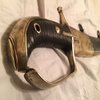
Yours doesn’t look very Hungarian (e.g. grip, pommel) so I wouldn’t rule out Indian origins although my knowledge of the latter is very limited. That kind of brass grip looks quite early 19thC to me.
|

|

|
|
19th June 2019, 12:23 PM
|
#2 |
|
Member

Join Date: May 2014
Location: Ireland
Posts: 545
|
Hi
A wild guess with nothing to substantiate it would be a sword for bull fighting? Interesting item and the brass handle does look to have some good age to it regards Ken |
|
|
|
|
19th June 2019, 03:50 PM
|
#3 |
|
Member
Join Date: Dec 2004
Location: NC, U.S.A.
Posts: 2,211
|
Perhaps the handle is a more modern replacement? The cross guard and blade seem to show honest aging. A nice piece, but also a puzzle-

|
|
|
|
|
19th June 2019, 06:21 PM
|
#4 |
|
Member

Join Date: Mar 2006
Location: Room 101, Glos. UK
Posts: 4,263
|
The dealer was fairly certain the brass handle was specifically designed for balancing this piece.It could of course been a later but still antique replacement.
Doubt it was a Bull fighting sword. Too stiff & narrow. Could be a boar hunting sword tho, but they generally have wider blades. example below. These are also 'estoc'. Last edited by kronckew; 19th June 2019 at 07:35 PM. |
|
|
|
|
19th June 2019, 08:05 PM
|
#5 |
|
Member
Join Date: Apr 2017
Location: Sweden
Posts: 767
|
Dealers may say a lot of things. The grip looks like an 18th or 19thC infantry man’s hanger. The guard looks a bit outsize but maybe just my imagination? When encountering items of brass it’s always good to consider the possibility of naval use as brass does not corrode nor rot in salt water.
|
|
|
|
|
23rd June 2019, 02:48 AM
|
#6 |
|
Arms Historian

Join Date: Dec 2004
Location: Route 66
Posts: 10,733
|
I think there is a compelling similarity with these alternating quillons on the guard to certain Chinese sword hilts on dadao (mostly ring pommel types) and some of the 'butterfly' knives (paired).
These types of edged weapons were used by Chinese martial artists and often security forces who worked as protective guards in various capacities and sometimes with foreign firms. The distinct similarity to British infantry hangers is well noted in those of mid to latter 18th c. (typically regarded as M1742 and M1751 though they were in use long before these dates). * Thomas Craven was a maker c.1800+ and the acceptance marks put the example shown about then, revealing how long these patterns remained in use in some cases. I am unsure whether this hilt is authentically from one of these swords or copied (cast) from one, but the hilt style is as described but again, with the European pointed escutcheon in the crossguard center. It seems possible that certain Chinese factions as mentioned did work with foreign colonial occupiers, though of course by the time of the Boxer Rebellion the weapons of foreign 'devils' were scorned. I have seen various cases of cross influence, and even British M1796 disc hilts with Chinese markings and inscriptions. Last edited by Jim McDougall; 23rd June 2019 at 01:52 PM. |
|
|
|
|
23rd June 2019, 08:42 AM
|
#7 |
|
Member
Join Date: Mar 2006
Location: Room 101, Glos. UK
Posts: 4,263
|
Interesting, I'd initially thought the guard was Chinese looking. The Brass grip looks cast to fit the guard but could have been copied as it doesn't look cut off from something else and it balances the blade nicely. The unmarked thrusting only type blade remains a bit unknown. would like to have seen the scabbard, would have answered a few questions. Thanks,Jim & y'all.
|
|
|
|
|
27th June 2019, 11:37 AM
|
#8 | |
|
Member

Join Date: Sep 2014
Location: Austria
Posts: 1,914
|
Quote:

|
|
|
|
|
 |
|
|


 Hybrid Mode
