
|
 17th November 2017, 12:06 AM
|
#1 |
|
Member

Join Date: Jul 2006
Location: Buraimi Oman, on the border with the UAE
Posts: 4,408
|
 THE ROYAL NAVY CUTLASS.
THE ROYAL NAVY CUTLASS
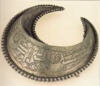
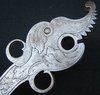
The peculiar word Cutlass has an interesting structure. Quote" One difficulty in defining "cutlass" is that the combination of word and weapon is almost uniquely English. The word "cutlass" comes from French coutlas, thence from Italian coltellacio and finally from Latin cultellus, but in none of those languages does it mean the short backsword that it means in English. The French word for the weapon we call "cutlass" is sabre d'abordage, boarding saber, and some equivalent of "boarding saber" is used in most European languages (Spanish sable de abordaje, Italian sciabbola d'abordaggio, German Entersäbel). The only language I know of besides English that uses a cognate of "cutlass" for a short backsword is the Dutch kortelas. So it can be hard to say if a weapon from a non-English European culture is a "cutlass," because they would use a completely unrelated word for it."Unquote. Another author writes in~ http://www.armsregister.com/articles..._cutlasses.pdf Quote"The origin of the name cutlass is obscure – The Oxford Dictionary gives “Curtleax” as the earliest form (1579) and “Coutelace” in (1594). Cutlass was the name applied essentially to a cheap cutting weapon supplied by the Admiralty for the use of seamen. The Board of Ordnance used the term “Sword for Sea Service” while later the Admiralty described them as “Sword Naval” The oldest manuscript reference in the British National Museum occurs in lists of weapons returned During 1645 – 1649."Unquote. One strange link via the Dutch East Indies is the Dogs Head Cutlass which should really be called the Lions Head because it is clearly a design influenced by the Sri Lankan Kastane pommel~ See below for comparison; Last edited by fernando; 17th November 2017 at 08:59 AM. Reason: Website cotaining forbidden material, as per rules. |

|

|
|
17th November 2017, 09:07 AM
|
#2 |
|
Member
Join Date: Jul 2009
Location: Nipmuc USA
Posts: 553
|
Paraphrased from elsewhere
" Sir Alexander Popham, an English seventeenth century military figure, was painted in his equestrian portrait wearing a kasthane." The Royal Armouries used to have a page dedicated to reviewing the portrait with glorious close-ups of his kastane. I believe there is a pdf showing some shots of the Littlecote Armoury, with a smaller detailed b&w view of the portrait. It has been posted here in the past. It appears that the Dutch Indies trade were influential in the development of some form of hilts. From my brief look at kastane, it seems a subject one could spend a life in discovery. Cheers GC Indeed http://www.vikingsword.com/vb/showthread.php?t=14998 Last edited by Hotspur; 17th November 2017 at 10:27 AM. |
|
|
|
|
17th November 2017, 03:50 PM
|
#3 |
|
Member
Join Date: Jan 2013
Location: Scotland
Posts: 383
|
Hi Ibrahiim,
Thanks for the link to John Carters article - I had not seen that before. It's a good summary of the British RN standard patterns with good photographs and even includes some of the less well known variants. Regards, CC |
|
|
|
|
17th November 2017, 04:00 PM
|
#4 |
|
Member
Join Date: Apr 2017
Location: Sweden
Posts: 785
|
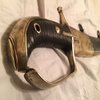
Interestingly some people are convinced that the animal represented on the pommel is a dolphin.
|
|
|
|
|
18th November 2017, 03:11 AM
|
#5 | |
|
Member
Join Date: Jul 2006
Location: Buraimi Oman, on the border with the UAE
Posts: 4,408
|
Quote:
Yes it is ...On swords of The Confederate Navy Officers~ for which an excellent video exists at https://www.youtube.com/watch?v=U2VY3_5P6IQ These swords were made in England in two centres by Birmingham; Robert Mole and London Ferman and Sons..The importer was in Charleston which is stamped on the Forte. On the sword at video you will see the Wilkinson mark as a six pointed star and the Proof Slug in the centre. The second video in sequence deals with that mark. Essentially suggesting strength and Unbreakableness... |
|
|
|
|
|
18th November 2017, 03:47 AM
|
#6 | |
|
Member
Join Date: Jul 2006
Location: Buraimi Oman, on the border with the UAE
Posts: 4,408
|
Quote:
Prior to 1800 the cutlass hilt was in the form of a figure of eight or double disc, the grip was a cylinder of wrapped steel, the blade plain and straight, (mine is grooved) and stamped with a ‘Fleur de lis’mark,probably (T Hollier 1720-1740) length varied, but around 28 to 29 inches (71-74cm)"Unquote. The last part of the paragraph is in itself a revelation as questions related to FDL (Fleur De Lys) crop up across the European Forum since the mark is French prior to the Revolution...and also thought to be a German mark... of course these could be imported blades we are looking at ...and refinished in England. 
Last edited by Ibrahiim al Balooshi; 18th November 2017 at 07:47 AM. |
|
|
|
|
|
18th November 2017, 08:19 AM
|
#7 |
|
Member
Join Date: Jul 2006
Location: Buraimi Oman, on the border with the UAE
Posts: 4,408
|
So what was 100 Gun Ship of the Line like? Here is HMS ROYAL GEORGE.
HMS "Royal George", 100-guns first rate ship of the line launch at Woolwich in 1756. In the armouries 50 swords and 70 hangars... By swords it meant probably Naval Swords since the term Cutlass had not yet been coined by the Royal Navy. |
|
|
|
|
18th November 2017, 09:19 AM
|
#8 |
|
Member
Join Date: Jul 2006
Location: Buraimi Oman, on the border with the UAE
Posts: 4,408
|
We can observe a battle involving boarding and hand to hand fighting involving Cutlasses thus to study the devastating effects of this weapon!and its use in the Royal Navy.
More casualties occurred in this single action than to HMS Victory's crew in the Battle of Trafalgar. The case study being seen on~ https://en.wikipedia.org/wiki/Capture_of_USS_Chesapeake As a pre-amble this is the historical note ~110...The Capture of USS Chesapeake, or the Battle of Boston Harbor, was fought on 1 June 1813, between the Royal Navy's frigate HMS Shannon and American frigate USS Chesapeake, as part of the War of 1812 between the United States and Great Britain. The Chesapeake was captured in a brief but intense action in which over 80 men were killed. Last edited by Ibrahiim al Balooshi; 18th November 2017 at 11:43 AM. |
|
|
|
|
19th November 2017, 12:38 PM
|
#9 |
|
Member
Join Date: Jan 2013
Location: Scotland
Posts: 383
|
Casualty List
The Shannon v. Chesapeake duel is also well described by Gilkerson in 'Boarders Away'.
He also includes the casualty list from the Shannon which lists the frequency and the cause of each death and wound. This makes for interesting reading. First place is taken by small calibre ball wounds - 33, followed by larger calibre ie: grapeshot, 22. Cutlass wounds were surprisingly few at 5 with two more attributed to pike or bayonet. The remainder were wounds caused by splinters or impact damage. Unfortunately the much lengthier list for the American ship has not survived but there were reportedly many more cutlass and pike wounds. Presumably, at least in part, due to the boarding action where the Brits were on the offensive. CC |
|
|
|
|
19th November 2017, 06:22 PM
|
#10 |
|
Member
Join Date: Mar 2009
Posts: 1,071
|
Michiel de Ruyter 1667.
Ceylon (in 1972 called Sri Lanka)was a Dutch colony from1640-1796. best, Jasper |
|
|
|
|
20th November 2017, 07:09 AM
|
#11 | |
|
Member
Join Date: Jul 2006
Location: Buraimi Oman, on the border with the UAE
Posts: 4,408
|
Quote:
|
|
|
|
|
|
20th November 2017, 07:13 AM
|
#12 |
|
Member
Join Date: Jul 2006
Location: Buraimi Oman, on the border with the UAE
Posts: 4,408
|
Lovely artwork though is it a Cutlass? Certainly it shows the Lionhead potential for a Castane or Dutch derivative sword. The Dutch were there for a whole lot longer than that but as you point out these were the dates for their official period in Sri Lanka at the time. He has a Globe which looks like an Ortelius Dutch map / chartmaker.
This was one of the finest Dutch Admirals in History~ Please See https://en.wikipedia.org/wiki/Michiel_de_Ruyter Last edited by Ibrahiim al Balooshi; 20th November 2017 at 07:25 AM. |
|
|
|
|
20th November 2017, 09:13 AM
|
#13 |
|
Member
Join Date: Jul 2006
Location: Buraimi Oman, on the border with the UAE
Posts: 4,408
|
There are several good books about Cutlasses here are some ...and a good web reference with a great deal of detail at https://books.google.com.om/books?id...20MARKS&f=true
Book Suggestions; Last edited by Ibrahiim al Balooshi; 20th November 2017 at 09:42 AM. |
|
|
|
|
21st November 2017, 05:06 AM
|
#14 | |
|
Arms Historian

Join Date: Dec 2004
Location: Route 66
Posts: 10,851
|
Quote:
An account of this event with this captain is told in "British Naval Swords & Swordsmanship", (John McGrath and Mark Barton, 2013, p14)where there is an account titled 'Treatment of a Wound from a Sabre Cut' given. Apparently Captain P.B.V. Broke of the Shannon while boarding the Cheasapeake, received a serious blow to the head with a sword which extended from top of his head across the left parietal bone to his ear. He was badly weakened from blood loss and underwent a period of recovery, and apparently as noted did not ever command a ship again, but was awarded a title of Baron for his valor and achievements. |
|
|
|
|
|
21st November 2017, 05:20 AM
|
#15 |
|
Member
Join Date: Dec 2004
Location: NC, U.S.A.
Posts: 2,229
|
Excellent thread on my favorite type of weapon! Nothing to add to what's already been said other than the fact that many of the naval pattern cutlass had surprisingly blunt edges. If one remembers that the chief initiative of naval boarding was for the capture of the ship, one can assume that many of the blows from these weapons was to incapacitate the enemy vs. downright kill him. Rest assured, a cutlass blow could kill, but in the descriptive battle CC mentioned, casualties from edged weapons were indeed low.
I read a book on 19th c. cutlass practice and learned the chief target was the opponent's head, thus the development of the unique leather head gear developed by the Americans. A cutlass slamming into your skull would certainly split the scalp, get blood in your eyes, stun or knock you senseless and take the fight out of you, but not necessarily deliver a mortal wound. Cannon balls, shivers/splinters, grenades and musket shot, on the other hand, was more deadly and caused the most trauma. When boarding, the boarders were often the last attack plan, with the cannons, grapeshot and musket fire from the tops sweeping the deck first. The 'party' were the finishing-up crew. |
|
|
|
|
21st November 2017, 10:40 AM
|
#16 | |
|
Member
Join Date: Jul 2006
Location: Buraimi Oman, on the border with the UAE
Posts: 4,408
|
Quote:
|
|
|
|
|
|
21st November 2017, 02:16 PM
|
#17 |
|
Member
Join Date: Jul 2006
Location: Buraimi Oman, on the border with the UAE
Posts: 4,408
|
It is perhaps the right time to look at training on Cutlasses on board and ashore ~ As noted previously The Captain of HMS Shannon was keen to get his men used to cutlass work... He used sticks to very good effect.
Below some interesting scenarios on Cutlass Training.~ Bristol Police Training, Cutlass Drill on HMS Cerebus, Training in a shore station at Dawlish and a white seachart of different defence and attack drills ordered by the Admiralty. Last edited by Ibrahiim al Balooshi; 21st November 2017 at 02:40 PM. |
|
|
|
|
21st November 2017, 07:52 PM
|
#18 |
|
Arms Historian
Join Date: Dec 2004
Location: Route 66
Posts: 10,851
|
Well made note Mark on the dull edge of the cutlass. if that were not the case, the wound suffered by the captain of the Shannon would have split his head like a melon.
It seems funny with the sailors holding these in a fencing stance. These were anything but sharp cutting swords, and by these times, as Mark noted, more like bludgeons. Quite different than boarding in the earlier times of fighting sail and pirates. The notion of 'fencing' in the manner of every 'swashbuckling' movie or romantic flashing blades in literature is of course, just fun, but mostly nonsense. |
|
|
|
|
21st November 2017, 08:44 PM
|
#19 |
|
Member
Join Date: Jul 2009
Location: Nipmuc USA
Posts: 553
|
"Use the point boys, save the edge for kindling."
Considering the wide use of straight bladed cutlasses over the centuries, there is little doubt thrusting was considered effective. A lot of late sail training pictures and manuals seem to regard what one sees in lots of sabre notes. http://www.pbm.com/~lindahl/paradoxes.html Compare George Silver to later traits such as Donald McBane and one still sees undeniable similarities applicable to both straight and curved blades. There are keggers of discussions re the veracity of cut vs thrust and reviewing those, as well as virtually any treatise on early modern swordsmanship, one can go back to Silver and find a simple truth that "Perfect fight stands upon both blow and thrust, therefore the thrust is not only to be used." However prefaced before that with the statement "That a blow comes continually as near as a thrust, and most commonly nearer, stronger, more swift, and is sooner done." At any rate, what we see in these photos is quite traditional sabre play but don't forget a long, long tradition of singlestick. Cheers GC |
|
|
|
|
22nd November 2017, 05:53 AM
|
#20 |
|
Member
Join Date: Dec 2004
Location: NC, U.S.A.
Posts: 2,229
|
Both Jim and Glenn pointed out that the slashing attack with the cutlass wasn't practical. This makes total sense when we remember that ship's decks were extremely tight quarters and overcrowded. Although some longer swords made it to sea, the primary edged weapons were short hangers, cutlasses, dirks, etc. Thrusting weapons were the item of choice, evidenced by the reemergence of the ancient pike, much shortened to fit on a crowded ship's deck. The point is that it makes sense that the cutlass could be used as a sharpened bludgeon, but worked better as a stabbing implement like the pikes and dirks.
As a medical person, I would say that a jab to the face or neck could obviously be lethal, penetrating the airway, severing the trachea, carotids and jugular. To the chest, there is penetration of the lungs, bronchus (all fatal), heart and great vessels (aortic arch), abdominal cavity with its vascular liver and pancreas. Also consider the cutlass in the use for DEFENSE of the ship vs the aggressor boarding party. Netting was placed over the ship to discourage boarders, with the pikemen stabbing through the netting as the enemy attempted to clamber onto the deck. Again, a cutlass would work far better here as a thrusting defensive weapon, stabbing through the tight ropes at those on the other side. It stands to reason that this is why, as Jim astutely pointed out, the cutlass became more of a blunt tool over the years. |
|
|
|
|
22nd November 2017, 09:14 AM
|
#21 |
|
Member
Join Date: Jul 2006
Location: Buraimi Oman, on the border with the UAE
Posts: 4,408
|
Salaams M ELEY, I agree entirely...and this is underlined by its use as a Police weapon..In the Navy many of the moves do appear to be as a thrust action...I would imagine also that in a melee it would be more a brawling weapon and in the final assault little room and no time to dawdle in posed sword stance... More the concept of "get in there and bash heads"! The stabbing effect would certainly be most useful in close fighting.
|
|
|
|
|
23rd November 2017, 12:35 AM
|
#22 |
|
Member
Join Date: Dec 2004
Location: NC, U.S.A.
Posts: 2,229
|
Exactly, Ibrahiim. Thanks again for posting this information, especially the charts on cutlass drill. I think it is a welcome edition to this forum for future collectors and historians!
|
|
|
|
|
23rd November 2017, 12:31 PM
|
#23 |
|
Member
Join Date: Jul 2006
Location: Buraimi Oman, on the border with the UAE
Posts: 4,408
|
Thanks M ELEY . Here is another picture.. I have to say that they do seem to have practiced the thrust manouvre ~
|
|
|
|
|
23rd November 2017, 01:42 PM
|
#24 |
|
Member
Join Date: Jul 2006
Location: Buraimi Oman, on the border with the UAE
Posts: 4,408
|
Here is an interesting sketch~
Note the Pattern 1871 "Bayonets, Sword, Naval, with Cutlass Guard, for Martini-Henry Rifles" ~and that the terminology even so late in Victorian times was still the old style of wording; Sword Naval. This sketch indicates that this was part of the Marmara contingent apparently practicing repelling enemy cavalry ashore..
|
|
|
|
|
24th November 2017, 02:52 AM
|
#25 |
|
Member
Join Date: Dec 2004
Location: NC, U.S.A.
Posts: 2,229
|
Great additions, Ibrahiim. You brought up a good point that just because a weapon went to sea didn't mean its exclusive function in that regard. Obviously, marine troops on ships were used for land actions, as this 'Marmara' contingent you pictured would have done.
Many of the boarding type weapons long outlasted their supposed usefulness in regards to changing warfare (the obsolescence of the sword towards the later 19th c.), era and the end of Fighting Sail. Cutlasses and pikes still continued to find their way aboard merchant ships and tea clippers into the early 20th century. Still, one might recall that many of these trading ships were traveling to the East to possibly 'seedy' ports, through areas where piracy was still alive and well (Malay islands, South China Sea) and into tropical warrens where local tribes were possibly hostile to the European interlopers (Polynesia, Borneo, the Celebes, etc). There is an amazing and exciting descriptive encounter between whalers and Kingsmill islanders as they stormed the ship in Gilkerson's 'Boarder's Away', pg 135. The point being, these weapons were still relevant up unto the present era. |
|
|
|
|
26th November 2017, 02:06 PM
|
#26 |
|
Member
Join Date: Jul 2006
Location: Buraimi Oman, on the border with the UAE
Posts: 4,408
|
The best common sense training using a Sabre...same as a Cutlass..can be viewed on https://www.youtube.com/watch?v=B7VBxc8WsXc There is an interesting first video from a RN vessel..showing some good snappy Cutlass drill movements. The second video is excellent.
|
|
|
|
|
30th November 2017, 06:38 PM
|
#27 |
|
Member
Join Date: Jul 2006
Location: Buraimi Oman, on the border with the UAE
Posts: 4,408
|
Of Royal Naval Operations ashore~The Cutlass can be seen clearly in these sketches...particularly in the hollow square.
|
|
|
|
|
1st December 2017, 01:04 PM
|
#28 |
|
Member
Join Date: Jun 2017
Posts: 28
|
The etymology given for the word "cutlass" is partly wrong. Cutlass, in it's current form, comes directly from French "coutelasse"/"coutelace" (thus the double S in English, if it had come from the more modern word "coutelas" it wouldn't carry the "S" sound), already attested in French in the 14th century. I find reference to variants such as "coutelesse", "courtelasse" (probably a sort of oral shift towards "courte", short, because it is a short sword/saber, and this is probably where the Dutch "kortelas" comes from in some way). It comes directly from the French "coutel", which itself comes from Latin cultellus. It evolved separately from the Latin root, it wasn't taken from Italian. By the way, the dialects of southern France and northern Italy were really a smooth transition from typical Italian to northern French (which later became the French language due to the fact it was the French spoken by the king and its civil officers, and the Parliament of Paris), forming a https://en.wikipedia.org/wiki/Dialect_continuum]dialect continuum[/URL]. But in every text there is, you'll find "coutelasse" or "coutelas" to mean a short sword or saber, exactly as in English, or maybe a sort of machete in 19th and 20th c. texts when talking about a colonial context.
|
|
|
|
|
1st December 2017, 10:15 PM
|
#29 |
|
Member
Join Date: Jul 2006
Location: Buraimi Oman, on the border with the UAE
Posts: 4,408
|
Salaams Madnumforce, I think you are partly right but viewing the Dutch term it may seem to some that the word evolved from that direction..Always a very interesting mixture of potential tectonic plate movements in a dialectic sense l suppose? Anyway not with standing the linguistics l think we have a balance here of the precursor to the Naval term Cutlass and a reasonably instep delivery of the weapons distribution style and uses as well as a little of the training methods..into the late 19thC. Great to have your input on the actual word.
|
|
|
|
 |
|
|


 Linear Mode

