
|
 2nd February 2006, 05:29 PM
|
#1 |
|
Member
Join Date: Dec 2005
Posts: 692
|
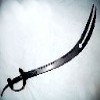
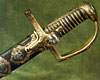
 Strange Yataghan
Hi!
I've been offered that puppy and I don't actually know what it is. Seems a german reinterpretation of a turkish yataghan  The hilt is ivory? and the quillon section seems verry german to me or might be actually turkish simpler design of their WWI ordonance swords. The blade i verry plain and no decoration on it apparently. Is tat some sort of turkish ordonance short sword/dagger ith obvius simplified design? The hilt is ivory? and the quillon section seems verry german to me or might be actually turkish simpler design of their WWI ordonance swords. The blade i verry plain and no decoration on it apparently. Is tat some sort of turkish ordonance short sword/dagger ith obvius simplified design?
Last edited by Valjhun; 2nd February 2006 at 06:24 PM. |

|

|
|
2nd February 2006, 06:28 PM
|
#2 |
|
Member
Join Date: Dec 2004
Location: Ann Arbor, MI
Posts: 5,503
|
Looks almost like a hunting sword
|
|
|
|
|
2nd February 2006, 07:02 PM
|
#3 |
|
Member

Join Date: Dec 2004
Location: What is still UK
Posts: 6,027
|
The guard has a Chinese look which I am not sure is quite right it just seems a little ill fitting. I am also suspicious about these file marks? Tim
|
|
|
|
|
2nd February 2006, 07:18 PM
|
#4 |
|
Member
Join Date: Dec 2004
Location: What is still UK
Posts: 6,027
|
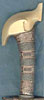
I am really sorry, I am hitting this pretty hard. The lanyard hole in the handle does not look as if it is through a tang, central to the blade or from the blades back. I am not sure the handles are blind like this on yataghan, if that is the correct terminology. Tim
|
|
|
|
|
2nd February 2006, 07:28 PM
|
#5 |
|
(deceased)
Join Date: Dec 2004
Location: East Coast USA
Posts: 3,191
|
This looks like a composite sword to me? Yataghan blade with a European style hunting sword hilt.
Lew |
|
|
|
|
3rd February 2006, 07:37 PM
|
#6 |
|
EAAF Staff
Join Date: Dec 2004
Location: Louisville, KY
Posts: 7,417
|
Yeah, I'm with you Louie on composite puppy.
|
|
|
|
|
3rd February 2006, 08:27 PM
|
#7 |
|
Member
Join Date: Apr 2005
Posts: 190
|
It might be wise not to write this sword off too quickly as an assembled piece.
I recall there was a thread a few years back regarding the Pandors, in fact there was even a photo of one forumite dressed as one? They, among others, used such hybrid weapons-- or influenced them, in any case. There was endless warfare throughout the 17th and 18th century between the Turks and most of the Eastern European powers. This is probably a captured Ottoman blade fitted up for a German or Austrian. The bladeform is consistent with an earlier dating, and this type is also often pattern welded. Though the grip is provincial relative to others I've seen, I will venture a guess in the latter 18th century. Someone who is more knowledgeable about this form of guard can probably place it within a decade or two. Ham |
|
|
|
|
4th February 2006, 01:31 AM
|
#8 |
|
Member
Join Date: Jun 2005
Posts: 221
|
It might be wise not to write this sword off too quickly as an assembled piece.
If it is an assembled peice, it looks like the work was done quite some time ago. It also looks as though the new handle failed in use. So whomever bought this thing intended it for more then a simple wall hanger. n2s |
|
|
|
|
4th February 2006, 09:32 PM
|
#9 |
|
EAAF Staff
Join Date: Dec 2004
Location: Louisville, KY
Posts: 7,417
|
I would agree with you if it werent for the crossguard and the ferrule. The crossguard looks more chinese modern to me.
|
|
|
|
|
5th February 2006, 08:52 AM
|
#10 |
|
Member
Join Date: Dec 2004
Location: What is still UK
Posts: 6,027
|
I am with Battara on this one. I suspect this has been assembled fairly recently. I too feel the guard is Chinese and recent, just have a look at the guards on some of the Chinese offerings from ebay.
|
|
|
|
|
5th February 2006, 06:24 PM
|
#11 |
|
Member
Join Date: Apr 2005
Posts: 190
|
"just have a look at the guards on some of the Chinese offerings from ebay" ?? Is this the new reference standard?! I think not.
Tell you what, gentlemen. If, after one of you bothers to look into how European hunting swords were hilted (in a book, not eBay please) you can confidently say the mounts are Chinese, Stout's all round on me. Ham |
|
|
|
|
5th February 2006, 08:14 PM
|
#12 |
|
Member
Join Date: Dec 2004
Location: What is still UK
Posts: 6,027
|
No ebay is not the new bench mark. I still cannot see this as a genuine hunting weapon. In Europe hunting was and still is in many cases the preserve of the rich. This knife is not that. I prefer bitter it is sharper and lighter to taste. Tim
|
|
|
|
|
5th February 2006, 09:59 PM
|
#13 |
|
Arms Historian

Join Date: Dec 2004
Location: Route 66
Posts: 10,871
|
I enthusiastically agree with Ham....ebay as reference resource...NOT!!!!
I also concur with Ham on his assessment noting the very plausible Pandour associations with this weapon, and I would consider this sword homogenous, although possibly taken apart in restoring or cleaning components. The Pandours were essentially auxiliary units of the Austrian army during the reign of Maria Theresa, who very much influenced subsequent units that were added to the armies of several other European powers. These swords were basically fighting variants of 'hunting' swords, or couteaux de chasse and these evolved from similar hunting or riding swords of the 17th century. The Pandour examples were of mid 18th century, and this example may be one of the form probably used by as a fighting sabre by European officer in one of the latter auxiliary units modeled on the Pandour regiments. An illustration of these Austrian Pandour attributed swords is found in "Les Armes Traditionelles de l'Europe Centrale" by I. Lebedynsky (p.69) and the deep bellied blade is virtually the same. While the decidedly oriental crossguard seems atypical, one of the key elements of the dress of these Pandour styled units was the fearsome appearance enhanced by varied and fearsome looking oriental garb, scalplocks and drooping mustaches etc. It would not seem unusual that such a guard might have been added on one of these swords. This example may be a yataghan type cavalry sabre of possibly Balkan or Austrian use from latter 18th to early 19th c. Best regards, Jim |
|
|
|
|
6th February 2006, 05:31 PM
|
#14 |
|
Member
Join Date: Apr 2005
Posts: 190
|
Tim, before you sip that bitter have a look at this:
An early-mid 18th century German hunting sword fitted with a heavy double edged blade. Note the close similarity in the guard, also the one-piece grip. There is another similar with a different form of blade ending on eBay shortly. When it does I will attach the link for further comparison. Your observation regarding hunting and the aristocracy is a reasonable one. What it does not take into consideration is that though such swords began as hunting implements, they quickly became popular with officers and then, as is usually the case, with common soldiers as sidearms. Further, we are not seeing the sword above in its pristine state. The hilt parts are heavily worn-- note the corrosion on the ferrule. By contrast, the guard is bright. It has been cleaned over time, so that any embellishment which would originally have been found there is long gone. Ham Last edited by ham; 6th February 2006 at 05:46 PM. |
|
|
|
|
6th February 2006, 06:05 PM
|
#15 |
|
Member
Join Date: Dec 2004
Location: What is still UK
Posts: 6,027
|
That is very interesting Ham and I will agree that you have shown a similarity but just look how weak the handle of the one in discussion is, and then compere it to the one you have post. What do you make of the fresh file marks? Tim
|
|
|
|
|
6th February 2006, 06:47 PM
|
#16 |
|
Arms Historian
Join Date: Dec 2004
Location: Route 66
Posts: 10,871
|
The example Ham has posted presents interesting support for probable European provenance of the sword in discussion, very Oriental appearing guard as well recalling those of the Chinese jian. Trade with the Orient was well established in these times and Chinese weapons were keenly favored by aristocrats who proudly displayed them in thier estates.
These lighter and smaller swords known as hunting swords often served as 'riding swords' and sidearms favored by the gentry during the 17th century before the advent of the smallsword in Europe. They became well known as sidearms favored by officers, who of course were in effect members of the gentry as well. This was especially known among maritime figures, and the hangers of these forms became well known among naval officers, officers on trade vessels and the familiar examples seen carried by pirates. They of course served well in close quarters combat as aboard ships, and in other instances were comfortably worn in city wear and riding, as well as in many combat situations found good purpose during melee. Despite thier utilitarian associations, these hangers were effective sidearms for defense. By the 18th century, hunting hangers had become well established among gentry, and often were produced as esteemed gifts and presentations in many situations. Their use as weapons is clearly shown in the Lebedynsky reference I have cited as well as many others, and larger more combat intended blades were indeed added for mounted use. Since regulation swords were not entirely in place as yet, especially for officers, who maintained free reign to carry sword styles either in vogue, heirloom or presented as they saw fit. The auxiliary forces of course carried whatever weapons they favored or had captured. Best regards, Jim |
|
|
|
|
8th February 2006, 02:33 AM
|
#17 |
|
Member
Join Date: Apr 2005
Posts: 190
|
Tim, what I have tried to show here is not that I dug up another sword with a similar guard-- that tends to leads to "the chicken or the egg" reasoning. Rather, I am trying to present the notion that one ought to search out and recognise formal groups, in this case guards, which tie together like examples.
Here is another of this type: http://cgi.ebay.com/OLD-CONTINENTAL-...QQcmdZViewItem Comparison leads to second deduction-- these similarly-hilted weapons share a spectrum of blade forms: we have one mounted as a yataghan, one symmetrical and another single-edged. This also supports a European origin for the sword under examination. The most general requirement I suppose is to broaden one's knowledge of forms as much as possible. Fortunately for most of us, it's a pleasure. As for the scratches on the guard, I can barely make them out I'm afraid. However given the condition of the ferrule relative to the guard, I would suggest that the scratches are indicative of cleaning which was more enthusiastic than skilled. Finally, I don't seem to be able to find any Chinese swords in any of my references with guards that bear more than a vague similarity with that of the one under discussion. Can you provide an example please? Ham |
|
|
|
|
8th February 2006, 03:34 AM
|
#18 |
|
Member

Join Date: Dec 2004
Location: B.C. Canada
Posts: 473
|
Oh boy I know I am gonna get it now, taking on both Jim and ham, But, this one smacks of a pieced together specimen. At minimum it has been heavily and poorly messed with. 1) I will start with the corrosion on the hilt lanyard rivet and ferrule are completely different than the guard and the blade. Accepted that the guard and blade have been heavily cleaned, but I would expect more pitting if it started the same. 2) the ferrule is broken, that is usually a sure sign that the hilt has been switched and did not fit correctly. 3) the ferrule does not fit the guard ie; it doesn't curve to conform to the curve of the back of the guard. is that a piece of leather in between? lastly and the weakest 4) the over all appearace is "off". Now I will brace my self for the replys
 . As ham has stated this is a pleasure. . As ham has stated this is a pleasure.Jeff |
|
|
|
|
8th February 2006, 09:20 AM
|
#19 |
|
Member
Join Date: Dec 2004
Location: What is still UK
Posts: 6,027
|
Jeff, my thoughts exactly. The handle although ivory is so clumsy on this weapon especially as it is purporting to be a gentleman's accessory.
Sometimes you have to punch above your weight or it goes to the wrong guy.
|
|
|
|
|
8th February 2006, 09:27 AM
|
#20 |
|
Member
Join Date: Dec 2004
Location: Poland, Krakow
Posts: 421
|
Dear All!
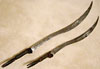
I'm happy to see discussion on this particular kind of hangers. I was always curious of this type because there are rarer and there is almost lack of any informations about them. I haven't much time to watch discussion very carefuly, but if I understand well, we've got two problems. First one is about genuineness of Valhjun's hanger. I'm not taking voice here about it, but I can say the hilt is quite poor. Such hilts were usually decored with engraving and repusee. But maybe such exceptions existed, though its out-of-style appearance is somehow strange. But I will second ham's and Jim's thoughts about hangers. Such ones with "chinese" hilts existed, and were produced in Europe, probably in central Europe, and it was somehow connected to oriental fashion popular on courts. Below you'll find more examples. First and second one are from book "Hladno lovacko oruzje" by Dora Boskovic. First one was made by Clemens Weyersberg in Solingen, 1730-1740 y., second is dated on 18/19 c., so it's quite late. Other ones are examples from my museum, dated around 2nd and 3rd quarter of the 18th century. One is with yataghan blade, with etched inscription looked like pattern, other one is with badly damaged, broken blade, but you can see some magical signs in there, used mostly in Germany. Regards! |
|
|
|
|
8th February 2006, 10:36 AM
|
#21 |
|
Member
Join Date: Dec 2004
Location: What is still UK
Posts: 6,027
|
Fantastic wolviex, this has been most informative and so far I still do not feel I have to eat all that I have said
. The one in question does not even look that old and as the pictures show the handle is stubby and not elegant. I do not think I have seen this Chinese style on British hunting hangers.
|
|
|
|
|
8th February 2006, 12:16 PM
|
#22 |
|
Member

Join Date: Dec 2004
Location: 2008-2010 Bali, 1998-2008 USA
Posts: 271
|
My hat is off to you, Wolviex, I guess you solved this one, pan Michalko... I wouldve probably throw it as one of the Russian potentates hunting dagger, two-three centuries ago.
|
|
|
|
|
8th February 2006, 07:03 PM
|
#23 |
|
Member
Join Date: Apr 2005
Posts: 190
|
Nicely done all. But who buys the beer?
Ham |
|
|
|
|
8th February 2006, 07:07 PM
|
#24 |
|
Member
Join Date: Dec 2004
Location: What is still UK
Posts: 6,027
|
Wolviex! I am drinking a very nice one right now called ZYWIEC 5.6% not bad for lager beer
.
|
|
|
|
|
8th February 2006, 07:11 PM
|
#25 |
|
Member

Join Date: Dec 2004
Location: Europe
Posts: 2,718
|
Wolviex, thank you for an excelent lecture, and thank you for exelent pictures
.Jens |
|
|
|
|
9th February 2006, 04:05 AM
|
#26 |
|
Member
Join Date: Dec 2004
Location: B.C. Canada
Posts: 473
|
Thank You Michal for the excellent dissertation and pictures, and to everyone else for the information on these interesting swords. I will be honest and admit I had never seen these before this thread.
thanks all Jeff P.S. I will provide the pints if any of you ever come out this way. Sorry Tim but bitters are almost impossible to get in N.A., at least in Western Canada. |
|
|
|
|
10th February 2006, 12:07 AM
|
#27 |
|
Arms Historian
Join Date: Dec 2004
Location: Route 66
Posts: 10,871
|
I must apologize for delay in responding. I just wanted to thank Wolviex for the outstanding post and illustrations supporting the observations on the Chinese motif presence on European hunting hangers of the 18th century, beautifully done!!! I would like to note also that in reviewing some Austrian sabres of the 18th century they also had openings pierced in similar location on the upper grip, presumably for lanyard or sabre knot.
Jeff, I always admire your keen assessments of weapon 'forensics'. You have noted very astutely some important factors that suggest inconsistancy in this weapon. Since the components conform essentially to those seen on known sword examples of this period, I am still inclined to presume them original to the sword, although it would seem there has been rather inept attempt at cleaning the weapon. I also think the weapon was dismantled to clean the blade and guard, although the ferrule, thoroughly corroded, was of course not cleanable. Since it is obviously rusted through, it must have cracked in reassembly. The darkened deep pitting areas on the guard seem to be left from the overcleaning. If I am not mistaken, inconsistancies in corrosion or patination are often due to different metal composition or quality, as well as the manner of production of the metal of the components.The blade itself, rather than being a 'yataghan' blade, is of a form known to exist on these 'military' hangers. While I would defer final judgement on the integrity of this example to hands on examination and to those much more experienced on appraisals, these are my observations based on what can be seen in the photos. Best regards, Jim |
|
|
|
|
10th February 2006, 02:42 AM
|
#28 | |
|
Member
Join Date: Dec 2004
Location: B.C. Canada
Posts: 473
|
Quote:
Hi Jim, I think unless more evidence is presented on this one, your final assesment stands. Now more importantly, does Lone Star make a bitter .All the Best Jeff |
|
|
|
|
|
10th February 2006, 07:53 AM
|
#29 | |
|
Member
Join Date: Dec 2004
Location: Poland, Krakow
Posts: 421
|
Jim!
There is one thing I would like to solve to avoid some misunderstanding. I put CHINESE in quotes because this is style which we are matching as such. I'm not quite sure if it was made as "chinese" in 18th century, how far our European ancestors were familiar with so exotic weapons from far far east. Maybe it's just a simple convergence of shapes? So the question is, do we have 18th c. chinese weapons that could be a pattern for these hangers, and were they know in Europe? Eastern fashion, I thought about, is appearing in yataghan blades, fitted to European hangers. Quote:

|
|
|
|
|
|
11th February 2006, 12:55 AM
|
#30 |
|
Arms Historian
Join Date: Dec 2004
Location: Route 66
Posts: 10,871
|
Hi Jeff,
Thank you very much for your courtesy, and I completely agree, further examination hands on and research would provide more conclusive assessment. I'm not too sure about 'bitters' and am pretty sure here in Texas not many know about them 'bitters'...but around here 'long necks' , especially Lone Star is what its all about!!! yee hah!!Hi Michal, I knew you meant 'Chinese' as a description of the type hilts we had been describing since that suggestion was used in the early posts on this thread. I think the guard itself was what brought this about as it has profound similarity to the guards well known on many Chinese jian, however the crossguard on our example is clearly very highly stylized. The extensive trade with the Far East by the 18th century, especially that carried out by the East India Companies of the major powers, brought the commodities as well as considerable material culture to Europe and England. I think one interesting use of 'Oriental' influence appearing on European swords were the smallswords which have become termed "Tonquinese" as this area, now of course Viet Nam, was thought their original source. In "The Smallsword in England" ( J.D.Aylward, 1945, pp.57,58) the author describes the decoration on these hilts as of black 'shakudo' bronze and that while these thought to have come from the Dutch factory in Tonquin, they were in fact most likely produced in a Dutch factory at Peking c.1710-1750. It is further noted that the Dutch brought Chinese workmen in hilts to Europe who worked in Amsterdam, as well as associated with Solingen (pertaining to the use of the blades of course). It is known that certain Chinese influences expanded to other weapon motif, as certain chinoiserie hilts reflected scenes including distinct Chinese architecture. I think these influences would have easily extended throughout Europe via the constant trade diffusion of blades via Solingen, and other key centers. It seems I have seen examples of certain Chinese swords or heavily influenced examples of them even in Transylvanian armouries, but cannot recall exactly when these were discussed (Radu any help on this? ). It seems the more I learn about the incredibly vast trade networks, the more I realize what a small world it really was, even then! Thanks again for the beautiful examples you posted of these distinctly influenced hangers!! All the best, Jim |
|
|
|
 |
|
|


 Linear Mode

