
|
|
|
 28th May 2026, 04:41 PM
|
#1 |
|
Keris forum moderator

Join Date: Aug 2006
Location: Nova Scotia
Posts: 7,295
|

Yes Martin, i also believe that it os worth preserving some keris even when they are very worn. I look forward to seeing this blade once it is fully cleaned and stained. I believe the wrongko can be restored to some a much nicer level as well, especially if you are skilled with French Polishing.
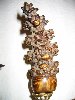
I find the mendhak rather interesting. Is any familiar with this form? I don't know that i have seen it before. |

|

|
|
28th May 2026, 06:12 PM
|
#2 | |
|
Member
Join Date: Aug 2007
Location: Germany, Dortmund
Posts: 9,784
|
Quote:
I can't tell you more about this type of mendak, I know that this type is rather rarely seen, Alan has shown once this type in two threads, pics are attached. I also have a keris with this type, last pic. Alan will be able to tell us more, hopefully.  Regards, Detlef |
|
|
|
|
|
29th May 2026, 08:48 AM
|
#3 |
|
Member
Join Date: Feb 2023
Location: Amsterdam
Posts: 174
|
Hi David and Detlef,
What i was told by some Dutch collectors that it is a cage mendak from West Java and pretty rare. And I truly hope to bring back some pamor with staining. Especially I have a lot Keris cleaned allready but not yet stained. Regards, Martin |
|
|
|
|
Today, 04:57 AM
|
#4 |
|
Member
Join Date: May 2006
Posts: 7,223
|
I'm a bit late to the party here, been away & very limited access to net & time.
I see this keris as a blade that might have been of some degree of quality at one time but has been largely eaten by time. The attention of a skilled m'ranggi might be able to bring some life back into it. Yeah, I know, a lot of out-of-culture keris collectors will be shocked by the idea of carrying out more than very minor surgery on an old, damaged blade. This is not the attitude of a knowledgeable Javanese keris person. In Jawa the attitude is that we have a duty, an obligation to preserve an item of tosan aji for future generations, & this means active restoration where this is warranted. This keris needs care & attention, not just staining. I cannot accurately count the luk. The visible luk come to 7, but that produces an unacceptably long distance from final luk to point, so originally this blade might have had 9 luk (current method of count). I think that the blade is probably East Jawa, possibly Madura Sepuh. I would need it in hand to give a solid, defensible opinion. The gayaman wrongko retains sufficient distinct characteristics to identify it as a generic gayaman that really, could come from anywhere on the Island of Jawa. The original work does not permit a precise affixation to the Solo area of Jawa, but the overall form is perhaps possible to fit into a Gandon or Kagok Gabel or Gabel sub-classification of Central Javanese gayaman forms. It does tend towards something that might have originated in Banyumas, but I think that to give it as Banyumas might be stretching things a bit too far. To comply with Javanese standards it should be given a complete strip, rebuild & polish. The same applies to the hilt & mendak --- but I'd tread gently with the hilt, this would need close examination under magnification before a final decision could be made. If we accept that the Javanese people own their own culture, & that the Javanese keris is a part of that culture, I believe that we really should try, in-so-far as it is possible, to follow the Javanese line of thought when we meet up with a sad old piece of tosan aji:- bring life back into the keris and make it something that future generations will regard as worthwhile preserving. |

|
|
 |
|
|


 Hybrid Mode
