
|
 10th July 2006, 09:58 PM
|
#1 |
|
Member

Join Date: Dec 2004
Location: Italia
Posts: 1,243
|
 Qama
Qama
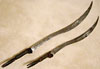
Hello, this kind of piece is new for me but, well, i like it
 Could you give me informations about this kind of sword? Ideas on the age? and the mark on the blade? and the silver (?) koftagiri? Thank you very much. Could you give me informations about this kind of sword? Ideas on the age? and the mark on the blade? and the silver (?) koftagiri? Thank you very much.
|

|

|
|
11th July 2006, 02:42 AM
|
#2 |
|
Member
Join Date: Dec 2004
Posts: 655
|
I would say Azerbaijan, Persian or not, something to south east from Tbilisi for certain.
Timeframe - I would need better picture of the koftgari. |
|
|
|
|
11th July 2006, 07:26 PM
|
#3 | |
|
Member
Join Date: Dec 2004
Location: Italia
Posts: 1,243
|
Quote:
Hello Rivkin, thank you very much. Here are some other pictures that i hope are better and clearer, but the koftagiri isn't so good  Please, could you also explain me, if it's possible, the difference between the qama and the kindjal? Thank you very much Please, could you also explain me, if it's possible, the difference between the qama and the kindjal? Thank you very much
|
|
|
|
|
|
11th July 2006, 09:01 PM
|
#4 |
|
Member
Join Date: Dec 2004
Posts: 655
|
Hm, I would say late XIXth century, but can't be sure.
Kindjal is a russian word, supposedly from arabic khanjar; qama is supposedly a farsi word, however turkish or even alanic origin is also possible. First is used since russian is a lingua franca in caucases. Second is used since such word (qama) exists in most caucasian languages; it is also used in Iran. They both describe the same object. |
|
|
|
|
11th July 2006, 09:22 PM
|
#5 |
|
Member
Join Date: Dec 2004
Location: Italia
Posts: 1,243
|
Thank you very much Rivkin, if i'm not too boring
 , can i ask you what the koftagiri represent? Thank you again , can i ask you what the koftagiri represent? Thank you again
|
|
|
|
|
14th July 2006, 10:12 PM
|
#6 |
|
Member
Join Date: Dec 2004
Location: Italia
Posts: 1,243
|
Could, please, someone enlight me on the meaning of the koftagiri? Thank you very much and sorry for my ignorance
|
|
|
|
|
15th July 2006, 02:10 AM
|
#7 |
|
Member
Join Date: Dec 2004
Location: Ann Arbor, MI
Posts: 5,503
|
"Tree of Life" was a popular islamic symbol. Is it what we see here?
|
|
|
|
|
15th July 2006, 09:43 AM
|
#8 | |
|
Member
Join Date: Dec 2004
Location: Italia
Posts: 1,243
|
Quote:
Thank you Ariel, in the inner part we see a writing or only a decoration (i mean like tuluth)? |
|
|
|
|
 |
|
|


 Linear Mode

