![]() |
|
|
|
|
#1 |
|
Member
Join Date: Dec 2004
Location: Ann Arbor, MI
Posts: 5,503
|
AJ1356:
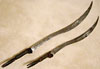
"Plus Bukhara and Samarqand are actually Tajik cities not Uzbek(which by twist of faith are located in todays Uzbekistan)." At the time these two weapons were made, there were neither Tajikistan, nor Uzbekistan: just a medley of khanates. Tajiks are Persian-speaking, and Uzbeks speak Turkic dialect. Tajiks originally were land-settled, while Uzbeks trace themselves to the nomadic descendants of Gengiz Khan. Tajiks usually view themselves as belonging to a "civilized" race, and despise "barbaric" Uzbek intruders ( even though those lived there since 6th or 7th century and many likely belonged to the same ethic group originally). Their food is virtually identical, but with some twists: Uzbeks, for example, have dishes from horse meat and use milk, while Tajiks don't ( both staples likely reflecting nomadic past of the Uzbeks). In both places, Sunni Islam is predominant, however. In the former Soviet Union one was taking his life in his own hands by mistakenly referring to a Tajik as Uzbek. A somewhat similar animosity was encountered in former Yugoslavia, between, say, Serbs and Croats or Bosnians. The apparent silliness of that approach finally culminated in tragic outcomes of wars and mass murders during WWII and quite recently. |
|
|
|
|
#2 |
|
Member
Join Date: Jul 2011
Location: Nashville
Posts: 317
|
Ariel, when I said Samarqand and Bukhara are Tajik cities it did not mean they are or were part of todays Tajikistan, it meant that when these 2 items were made and somewhat to this day, those 2 cities were predominantly populated by Tajiks. Actually they were populated by Farsi speakers well before the Mongol invation.
|
|
|
|
|
#3 |
|
Member
Join Date: Dec 2004
Location: Ann Arbor, MI
Posts: 5,503
|
Let's stop right here. From personal experience on this Forum, nothing good comes out of the discussions dealing with ethnic policies, grievancies and perceived primacies.
May they all enjoy the proverbial life, liberty and the pursuit of happiness. I have a book on Uzbek metalwork, nothing on Tajik; do you know of any? Did Tajiks use turquoise ribbons on their weapons? To the best of my knowledge, this was characteristic of Bukhara proper. Any apple blossoms as a decorating element? Do you know of any published examples of unquestionably Tajik swords, manufacturing centers etc? I just know the difference between the knives: Uzbeki Pichok ( P'chack) vs. Tajik Kord ( subtle but obvious). Best. |
|
|
|
|
#4 |
|
Member
Join Date: Oct 2007
Posts: 2,818
|
From a Russian Museum site;
The Central Asian name of turquoise derived from Iranian word firusa - victory; therefore its presence on the weapon endowed the latter with especially strong magic power, providing good luck at war. Turquoise became especially common in war paraphernalia of Turkic peoples. This would explain the stones being seen across a vast area. |
|
|
|
|
#5 |
|
Member
Join Date: Jul 2006
Location: Buraimi Oman, on the border with the UAE
Posts: 4,408
|
Salaams all I noted the decorative technique of studding Feruze onto small silver boxes and jewelery by master craftsmen in Kabul. Naturally and as stated above this was for talismanic effect and design...Like many techniques there is bound to be some overlap so that Turkomen Jewellery etc exhibits similar designs and methodology to Afghan, Tajic and a host of other ethnic groups in what we now call Afghanistan. (and neighboring countries) When I was in Kabul I tried all the well known collector names for the different knives and daggers but Kard was what they use for any dagger I saw.
Regards, Ibrahiim al Balooshi. |
|
|
![]() |
|
|