
|
 11th December 2011, 11:26 PM
|
#1 |
|
Member
Join Date: Apr 2006
Location: Kennewick, WA
Posts: 33
|
 Kukri ID
So I'm not really a collector, I have acquired a number of modern and antique blades to accompany my martial arts practice. I haven't had any experience in a martial art related to the kukri, but anyone who has spent any time in weapon arts has heard of the tales, so I had to get one. This was an ebay purchase, selected both because it was relatively inexpensive and because quite frankly I liked the lines.
 Blade length (measured along the spine) is 11 inches, it weighs in at about 14 oz, so a little on the smaller side. Handle appears to be a greenish horn of some kind, with some damage on one side. There do not appear to be any markings on blade or hilt. I realize this is pretty generic (or appears to my eyes) but if this provides any clue to anyone, I would love to hear any info on its story. Thanks! |

|

|
|
12th December 2011, 12:12 AM
|
#2 |
|
Member
Join Date: Nov 2011
Location: Brooklyn, NY USA
Posts: 227
|
Thats a nice kukri. The hilt is most likely hard wood as opposed to horn (there is no such thing as green horn, unless it is dyed) and looks old. However the leather on the scabbard appears to be new. Since there are no markings or other traits identifying this kukri as an antique, I would be inclined to consider it a contemporary piece. Its size and weight also fits this categorization. It is quite simple and functional, which is the most important feaure to those who appreciate these knives.
|
|
|
|
|
12th December 2011, 04:08 AM
|
#3 |
|
Member
Join Date: Apr 2006
Location: Kennewick, WA
Posts: 33
|
The hilt is definitely horn, I can see from the damage that it is not wood. It certainly has a more greenish cast than the carabao horn from my Filipino pieces. The third picture down has the best representation of the actual color, though in actuality I wouldn't call it "green," maybe a green-brown or something similar.
I am not surprised that it may be a fairly modern piece, I figure I will try it out for a season as a camp knife. Thanks, |
|
|
|
|
12th December 2011, 04:08 AM
|
#4 |
|
Vikingsword Staff

Join Date: Nov 2004
Posts: 6,441
|
 Hilt
Hilt
I expect that it's horn; looks like rodent or insect damage IMO .
|
|
|
|
|
12th December 2011, 04:10 AM
|
#5 |
|
Vikingsword Staff
Join Date: Nov 2004
Posts: 6,441
|
I'm thinking it's pre-1950; where's Spiral ?
 
|
|
|
|
|
12th December 2011, 05:50 AM
|
#6 |
|
Member
Join Date: Dec 2004
Posts: 1,247
|
Damage on the hilt is probably from silver fish. I had that happen to me a few months ago. Annoying.
F |
|
|
|
|
12th December 2011, 08:24 AM
|
#7 |
|
Member
Join Date: Jun 2008
Location: The Sharp end
Posts: 2,928
|
Spirals article is the best quick recource for military kukri types. The one in question appears to be based on the current issue kukri.
http://www.vikingsword.com/vb/showthread.php?t=1889 The holes in the horn look like bettle/bug damage to me as well (Fearns silverfish sound like tough little customers, the ones I rarely see here are cute and about 1cm long). The only real option for that damage is to mix up a little resin based filler of similar colour and fill the holes in. They aren't very big, it'll work OK. Have a look round a car boot sale and buy something made from black buffalo horn and use a rough file to grind off a kind of chunky dust and mix it with a little black wood stain and epoxy then spatula it in and smooth it off. When it's dry polish it with fine sandpaper and it'll look much better. Not invisible, but better than holes. |
|
|
|
|
12th December 2011, 08:58 AM
|
#8 |
|
Member
Join Date: Dec 2004
Posts: 1,712
|
Yep Genes pegged it, post 1960 Standard Brit. Gurkha issue style kukri.
Handle is greenish water buffalo horn. Many types of green horn occur naturaly although they seemed more common in older buffalo horn than they do post 50s. Whether ever issued to a Gurkha or a copy is impossible to say. Cheers Gene, Thats was when I first did it, its not bad but needed an update or two over the years {& even one of the updates was wrong!} The most recent version of Article is here. linky.... Happy to post an update here though. Will be doing a more final version & update early next summer. {after that not sure I can be bothered anymore!} spiral |
|
|
|
|
12th December 2011, 02:43 PM
|
#9 | |
|
Member

Join Date: Jul 2006
Location: Buraimi Oman, on the border with the UAE
Posts: 4,408
|
Quote:
|
|
|
|
|
|
12th December 2011, 04:26 PM
|
#10 |
|
Member
Join Date: Apr 2006
Location: Kennewick, WA
Posts: 33
|
Thank you to everyone for the information and suggestions on how to restore the hilt.
|
|
|
|
|
12th December 2011, 11:28 PM
|
#11 | |
|
Member
Join Date: Jun 2008
Location: The Sharp end
Posts: 2,928
|
Quote:

|
|
|
|
|
|
12th December 2011, 11:36 PM
|
#12 | |
|
Member
Join Date: Jun 2008
Location: The Sharp end
Posts: 2,928
|
Quote:
I should add that I usually add the wood dye (only a drop or two) to the horn shavings and then let it dry before mixing it with the epoxy. The epoxy is so overwhelmingly sticky that it will mix with the shavings to make a thick porridge. You need to make the shade of the shaving darker that you require as the epoxy will dilute it and make it lighter. It looks like the 'bitty' resin you sometimes see in tulwar hilts and other asian weapons. But it is VERY tough and so suitable for filling damage to horn. Best Gene Last edited by Atlantia; 13th December 2011 at 04:32 PM. |
|
|
|
|
|
12th December 2011, 11:54 PM
|
#13 |
|
Member
Join Date: Feb 2005
Location: England
Posts: 373
|
I would say it was post 1980's Service number two (Mk5 is not correct IMHO) as the kukri of this type tended to be issued with month and year marked on the blade in the 80's;
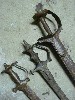
As in the one on the left, the one in the middle has even earlier markings;  Here is a nice Service number one, from the Gurkha museum in Pokhara, Nepal;  For a fairly detailed history of the Gurkha and the kukri follow the link; Link |
|
|
|
 |
|
|


 Linear Mode

