
|
|
|||||||
 |
|
|
Thread Tools | Search this Thread | Display Modes |
 14th July 2021, 06:19 PM
|
#1 |
|
Member
Join Date: Dec 2011
Posts: 27
|
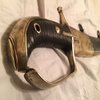
 Dating and determination of origin of a sabre with a lion-snake mount
Hello,
For the verification of a thesis, I ask you to date an determinate the origin of this sabre intuitively on the basis of the style of the mounting. If you know of similar mountings on other sabres, I would be grateful for informations and comparison pictures. Thanks, Richard |

|

|
|
17th July 2021, 02:37 AM
|
#2 |
|
Member
Join Date: Dec 2004
Location: NC, U.S.A.
Posts: 2,229
|
Well...no one else has come in on this one. This is a really beautiful piece! I'm clueless, but if I were to put my 2 cents in, I'd wager French based on the design as well as the solid brass hilt (which, to my knowledge, wasn't so popular with the Brits, Germans, etc). On the other hand, it reminds me of some of the British so-called 'band swords' with it's brass hilt and animal pattern, but band swords didn't have fighting blades like yours does. French officer's swords frequently favored brass and stylized hilts of snakes, roosters, etc. OK, now let's open the floor to those more knowledgeable!!
|
|
|
|
|
17th July 2021, 02:45 AM
|
#3 |
|
Member
Join Date: Dec 2004
Location: NC, U.S.A.
Posts: 2,229
|
Here's the British pattern band sword with brass lion hilt-
|
|
|
|
|
17th July 2021, 02:49 AM
|
#4 |
|
Member
Join Date: Dec 2004
Location: NC, U.S.A.
Posts: 2,229
|
Here's just one example of a fine French animal hilted sword. Your sword has downward langets, popular on many of their sword patterns, plus the gadrooning pattern on the langet very 'French' to me. Your lion/snake hilt sword makes me wonder if it might be influenced by the whole Napoleonic 'Nile' theme France had going on, where many European swords began having more mystical themes incorporated into the swords.
Last edited by M ELEY; 17th July 2021 at 04:44 AM. |
|
|
|
|
17th July 2021, 03:02 AM
|
#5 |
|
Member
Join Date: Dec 2004
Location: NC, U.S.A.
Posts: 2,229
|
Well, maybe I spoke too soon about a French connotation! Here is a British presentation sword heavily influenced by the Nile Campaign featuring a fine crocodile hilt, blued presentation fighting blade, etc. Still, my point being that the fighting in Egypt circa 1800 as well as the Barbary Wars affected sword design (U.S. forces also were influenced by exposure to ethnographic cultures around this time period, creating a mameluke style sword for the newly reformed U.S. Marine Corps). Based very loosely on my supposition, your sword could date c. 1800-30. Could we see a complete picture of the blade, as well as markings, designs? Length?
Last edited by M ELEY; 17th July 2021 at 04:41 AM. Reason: Added comment |
|
|
|
|
17th July 2021, 05:22 PM
|
#6 | |
|
Arms Historian

Join Date: Dec 2004
Location: Route 66
Posts: 10,861
|
Quote:
I very much agree with this being of this period and as you well note Capn, the campaigns in Egypt dramatically influenced military swords, with the well known mameluke sabers being a prime example. 'Oriental' fashion had already influenced European military styles since the mid 18th century, and the exotic flamboyance and appeal of the romantic 'flashing scimitar' were instantly appealing to the officers of both England and France. While England was a bit delayed in officially designating the mameluke hilt (1831), there were examples much earlier. The French however, seem to have been far 'sooner out of the gate' with mameluke hilts and of the familiar French variance of artistic scope in mountings. The neoclassic motif and zoomorphic representations on sword hilts, as shown here were characteristic already on officers sword hilts, but the Egyptian context added new themes, as seen by the 'Nile presentation swords' with crocodiles as shown. As noted, in England the flowing mane was favored on lion heads (exceptions of course, but fewer) while in France, the leopard, well known in hussar fashion on the Continent seems more in accord with this hilt. That is why I am inclined more to a French origin here, the snake, an artistic addition with certain allegorical connections classically also seems more a likely French affectation. These hilts are difficult to classify as officers of course commissioned their own swords by artisans who also designed them independently to appeal to the competitive fashion atmosphere of this time. I one had a British M1803 lionhead flank company officers saber, but instead of the flowing mane, the lion was given a stylized sphinx type style. I believe the 'pattern' was designated to a particular British unit, of which there were of course very few probably made. |
|
|
|
|
|
17th July 2021, 06:18 PM
|
#7 |
|
Member
Join Date: Dec 2011
Posts: 27
|
Thank you very much for your comments and assessments.
For my research, it is essential that this sabre is judged without consideration of the attributed historical context, respectively without preconception. For this reason, I will only show the outline of the blade in a first step. The blade length along the cutting edge measures approx. 80cm. I am grateful for all further opinions and ideas. |
|
|
|
|
17th July 2021, 07:14 PM
|
#8 | |
|
Arms Historian
Join Date: Dec 2004
Location: Route 66
Posts: 10,861
|
Quote:
The blade of course can often be judged pragmatically in degree, as the designs and profiles have those kinds of considerations rather than style typically. This is obviously a saber blade, cavalry (length) and the point most notable in what is known as a 'clipped point'. This type of point seems to have become popular in about mid 18th century, usually in Solingen made blades and its purpose seems to have been to afford better potential for a thrust.. While sabers are not typically regarded as a thrusting weapon, the arguments for cut vs. thrust were an ongoing debate, and the French were known for the deadly effect of their sword thrusts. Napoleon actually instructed his cavalry to 'give point'. With the saber the thrust is used from a high tierce position downward. This is well illustrated in the 1968 movie "The Duelists' with the combatants mounted and charging at each other. While this feature is well known on French and Continental sabers, it is seen on British 18th century swords in some degree, but by the Napoleonic period the sabers were leaning toward expanded point (yelman) and quill back blades while troopers sabers were hatchet point (M1796). With that, based on the blade there is inclination toward French though as I mentioned these points were strongly Solingen. In this period, the sword works at Klingenthal had many Solingen workers, and Napoleon did take over Solingen itself., |
|
|
|
|
|
18th July 2021, 10:36 AM
|
#9 |
|
Member
Join Date: Dec 2011
Posts: 27
|
I have searched for a comparable sabre grip on a French sabre, without success. Specially to note is that sabre hilt is distinguishingly formed as a lioness. This seems unusual, as otherwise lions (with manes) seem to be seen as pommels on sabre or sword hilts.
Am I correct in assuming that this mount and the decoration as well as the outline of the blade do not point to a British sabre? This even though sabre hilts with lion heads and serpents on the guard are known on English honour sabres for the beginning of the 19th century. |
|
|
|
|
18th July 2021, 12:44 PM
|
#10 |
|
Member
Join Date: Apr 2017
Location: Sweden
Posts: 785
|
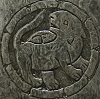
What about the foliage depicted on the scabbard? Looks like trefoil clover and some other flower. The big flower is not lotus (which has several layers of partially overlapping petals). Also, could it be a mer-lion (Singapore) with a sea serpent on the hilt and guard?
|
|
|
|
|
18th July 2021, 04:58 PM
|
#11 |
|
Member
Join Date: Dec 2011
Posts: 27
|
Until now, the pommel has been described as a lioness. I personally assume that a lioness is indeed depicted. But this could be a false assumption.
Without giving too much away, one can assume that the sabre, certainly the blade, is of European origin. In addition to the blade outline, you can see the blade tip here. |
|
|
|
|
18th July 2021, 05:00 PM
|
#12 |
|
Arms Historian
Join Date: Dec 2004
Location: Route 66
Posts: 10,861
|
Well noted points,
The blade is of 'clipped point' style as I have mentioned. It is a type of point which evolved around mid 18th century. It appears in Gerhard Seifert's 1962 "Schwert Degen Sabel" in a panel of blade drawings with it termed "pandour point'. This is quite frankly the only time I have seen the term used to describe this particular type of blade point. This refers to the auxiliary troops of the Austrian army c.1750s who were mostly from the Balkans and Hungary and wore exotic Oriental style dress as well as edged weapons and were termed 'pandours'. As mentioned also, this feature on blades was notably used in Solingen blades of that time period, and Solingen (Germany) furnished many if not most British blades up until the end of the 18th century. At this time by c. 1800, England was developing official sword patterns (M1796) and officers though still having carte blanche in their chosen styles, were favoring other blade forms such as the quill back, and expanded point (yelman). That is not to say that officers did not have this type of point, as there was an affinity for Continental styles, however, by 1800 it would be unusual in my opinion. France however, had been using later versions of the 'pandour' units in their army at this time, and as I had noted, French artisans creating elaborate hilt designs and mounts seemed to produce this type of work on the saber posted. As Victrix has noted, there seems to be unusual foliage included in the motif which may correspond to some of the colonial regions where the French were situated, which would include Egypt. As Richard notes, the cat without mane is as likely a lioness as a leopard, and variations of these type zoomorphic heads are indeed known in the Orient, primarily Ceylon (the kastane swords have was is known as a grotesque lions head, quite different from this). I remain inclined to see this saber as probably French, made obviously for an officer, perhaps with motif celebrating the Egyptian campaigns as noted with other such swords described. I do not have the necessary references to try to locate a possible match or similar example such as the lexicon of volumes by Christian Aries, but it is quite possibly found there. There is a magazine in France (or was) called "Le Hussard", and that may be a source. The attached are first, a British horsemans saber c. 1755-60 Note the clipped point, the blade is German but mounted by British cutler. Next is what is termed (loosely) a M1780 cavalry sword, again, the blade is with clipped point (style) but from Solingen. While these are not of course the exact profile of the saber discussed, you can see the general effect. With regard to this possibly being a British 'honor' saber, naturally that is possible. However it must be remembered how much cross influence between England and France there was, despite the fact that they were nominally 'at war' even when 'not actively on campaign' from 1790s until after Waterloo. The British officers sword of 1780s known as a spadroon with five ball hilt, was copied by the French in the opening years of the 19th century and termed ' l'Anglaise'. Officers swords were often artistically made often by commission or as presentation swords as the 'honor' sabers.............these are a most esoteric field with far more detailed research needed. Last edited by Jim McDougall; 18th July 2021 at 05:46 PM. |
|
|
|
|
18th July 2021, 10:22 PM
|
#13 |
|
Arms Historian
Join Date: Dec 2004
Location: Route 66
Posts: 10,861
|
Here is a French saber of the period, note the profile of the 'clipped point'.
|
|
|
|
|
19th July 2021, 01:10 AM
|
#14 | |
|
Arms Historian
Join Date: Dec 2004
Location: Route 66
Posts: 10,861
|
Quote:
If we are talking about the Lloyds Patriotic Fund swords which were issued 1803-09 basically and most seem focused on Trafalgar, these have themes oriented around Greek mythology presumably meant allegorically. I found an instance of a serpent, which was on the scabbard, and any of the lion heads were with mane, as the British lion in heraldic context. Another sword of 1804 had a serpent entwined on the knuckleguard, with the low relief lion head (presumably the Nemean lion) with flowing mane. I consulted "Trafalgar Swords of Honor" , Derek Spalding, in "Arms & Armor Annual", Vol. I, 1973, pp.258-265/. Also, "Trafalgar Tokens", Leslie Southwick, in "Royal Armouries", Vol. 2, #2, 2005, shows another sword with hilt having the lion head and entwined snake theme, again, lion with mane, and very low relief. While these are of course suggestive that this sword might fall into this group of swords, which seem to have had a great deal of individuality, the other indicators of blade and of course the 'lioness' head still lead away from British. It would seem the British always favored the flowing mane. Last edited by Jim McDougall; 19th July 2021 at 01:56 AM. |
|
|
|
|
|
19th July 2021, 02:05 AM
|
#15 | |
|
Arms Historian
Join Date: Dec 2004
Location: Route 66
Posts: 10,861
|
Quote:
The blades were inscribed to the recipient. Am I correct that neither of these features occur on this saber? |
|
|
|
|
|
19th July 2021, 03:59 AM
|
#16 |
|
Member
Join Date: Aug 2017
Location: North Queensland, Australia
Posts: 202
|
G'day Richard,
Sorry I am a bit late to this discussion. It all sounds a bit mysterious. Without seeing the blade decoration, it certainly looks a lot more French than British. The blade design with that clipped point is more of a French trait than British, (although as Jim pointed out you do get British blades with this as well). The scabbard is very French looking. I haven't seen a hilt exactly like this before, but have seen plenty of sculpted "one-off" hilts like this on British swords. Cheers, Bryce |
|
|
|
|
19th July 2021, 05:12 PM
|
#17 |
|
Member
Join Date: Dec 2011
Posts: 27
|
Dating on the basis of blade decoration
Thank you very much for the interesting and profound hints and contributions.
The scabbard has no signature. The picture below shows a section of the blade decoration. P.S. I must admit that it is not easy for me to write in English and I hope that my thoughts and contributions are understandable enough. I would like to apologise in advance for any misunderstandings. |
|
|
|
|
19th July 2021, 07:00 PM
|
#18 | |
|
Arms Historian
Join Date: Dec 2004
Location: Route 66
Posts: 10,861
|
Quote:
Richard, you are actually doing very well with the English! I will say again, and as previously noted, Mark's instincts (post #2) were spot on, this is French. I have it on good authority that the solid brass (again as Mark noted) is very much an indicator of French origin. I was informed that the 'stipple' design in the blade ornamentation is something French of late 18th-early 19th c. The circular rosettes with floral pattern are similar to others seen on French scabbards (the ones I have seen less petals). The absence of maker/cutler names on scabbard eliminates British origin with very rare exception from this period. Solid brass scabbard suggests French. The clipped point on the blade is more of Continental form, being more dramatic...the typically German made blades on British swords with this feature seem more elongated (note the point in my post #13, same type clipped point). It seems I have seen this kind of lioness or maneless cat head somewhere, but of course unable to locate. These unusual and sometimes 'one off' French officers swords are hard to pinpoint by comparison to others as there was not a standard run of any one pattern in these 'artistic' circumstances. Just as in England, the themes were typically neoclassic Greek allegories from that mythology in this period (1800-16). |
|
|
|
|
|
19th July 2021, 08:56 PM
|
#19 |
|
Member
Join Date: Apr 2017
Location: Sweden
Posts: 785
|
Quoted from Britannica: ” Sekhmet, also spelled Sakhmet, in Egyptian religion, a goddess of war and the destroyer of the enemies of the sun god Re... Like other fierce goddesses in the Egyptian pantheon, she was called the “Eye of Re.” She was the companion of the god Ptah and was worshipped principally at Memphis. She was usually depicted as a lioness or as a woman with the head of a lioness, on which was placed the solar disk and the uraeus serpent.”
|
|
|
|
|
19th July 2021, 09:21 PM
|
#20 |
|
Member
Join Date: Aug 2017
Location: North Queensland, Australia
Posts: 202
|
G'day Richard,
For some reason I have always thought this "stippled" blade decoration was Russian, but I am unsure where I got this from. Cheers, Bryce |
|
|
|
|
19th July 2021, 09:44 PM
|
#21 | |
|
Arms Historian
Join Date: Dec 2004
Location: Route 66
Posts: 10,861
|
Quote:
Well noted Bryce. The Russians were heavily copying French styles and patterns in uniforms and weapons. Not sure how all this was during the Napoleonic campaigns but just after they had many direct parallels. |
|
|
|
|
|
19th July 2021, 09:48 PM
|
#22 | |
|
Arms Historian
Join Date: Dec 2004
Location: Route 66
Posts: 10,861
|
Quote:
Thats pretty interesting, and while most of these neo classic themes on these officers swords in England and France seem based on Hercules, the chimera etc. ....the Egyptian theme was prevalent on many swords, as with the Nile swords. I must say this saber does have a feel toward the theme you mention. |
|
|
|
|
|
19th July 2021, 11:37 PM
|
#23 | |
|
Member
Join Date: Dec 2004
Location: NC, U.S.A.
Posts: 2,229
|
Quote:
|
|
|
|
|
|
20th July 2021, 03:42 AM
|
#24 |
|
Member
Join Date: Aug 2017
Location: North Queensland, Australia
Posts: 202
|
In this case we have the whole forequarters and pelt, so not sure the Egyptian connection applies, but could be artistic license? The other possibility is its a tiger?
Cheers, Bryce Last edited by Bryce; 20th July 2021 at 03:56 AM. |
|
|
|
|
21st July 2021, 12:32 PM
|
#25 | |
|
Arms Historian
Join Date: Dec 2004
Location: Route 66
Posts: 10,861
|
Quote:
The French were obsessed with ancient Egypt and the mythology and as such would surely have adopted these elements in themes of special one off honor sabers such as this appears. While the Uraeus was of course of cobra, the lack of hood here may simply be license or inadvertant omission. The goddess Sekhmet depicted as a lioness is certainly a compelling explanation for the pommel as typically the maned lion was popular. On the langet, I cant tell what these items are, they look like horns, but could they be solar rays? There seems to be a palm and a lotus used as well, which may allude to Nile. |
|
|
|
|
|
21st July 2021, 02:06 PM
|
#26 |
|
Member
Join Date: Dec 2011
Posts: 27
|
Blades with "stippled" blade decoration.
Decorations with speckled dots ("stippled" blade decoration) are known from luxury blades of Zlatoust (Russia) and were probably introduced there in 1816 by the master sword smith Wilhelm Nikolaus Schaaf, an emigrant from Solingen. Below you find two links to examples in the State Hermitage Museum in Saint Petersburg.
https://www.hermitagemuseum.org/wps/...c+armor/661213 https://www.hermitagemuseum.org/wps/...c+armor/668168 I know only few examples of very late 18th and early 19th century French blades with this kind of decorative element. As you can see on the sabre blade of General Kellermann (Link) and on the blade of Colonel Soulès Honour sabre (Sabre d'honneur) dating 1801 (picture attached). https://collections.isere.fr/fr/muse...&pgn=7&pos=115 The sabre attributed to General Kellermann is said to have been worn by him at the Battle of Valmy on 20 September 1792. I am confused about the dating of this sabre or at least of the blade. Due to the blade shape and length as well as the blade groove all the way to the tip and the engraved pyramid, I would not have estimated this blade earlier than the second half of French Directory (1795-1799). Accrording the "Musée de la Révolution française" Kellermann gave this sabre to his aide-de-camp, General Rigaud, who then passed it on to Sergeant de Gaulle, and bequeathed it to his grandson Frantz Goerg. This sword was apperently authenticated by Marshal Kellermann's granddaughter, Princess Ginetti born Henriette de Valmy in 1892, during an exhibition for the bicentenary of the Battle of Valmy (in 1992). The time from 1792 to the authentication of this sabre in 1992 is very long and carries the risk of error and misunderstanding. |
|
|
|
|
21st July 2021, 04:48 PM
|
#27 |
|
Arms Historian
Join Date: Dec 2004
Location: Route 66
Posts: 10,861
|
Richard, thank you for this additional information which is of course most interesting and salient to our efforts to properly identify this saber.
The Russian factor is certainly interesting and as previously noted, Russian styles definitely ran in close parallels with French in these times. Here I would observe the note on the Solingen maker in Zlatoust who may have introduced this blade decorating style. It has been well known that many makers from Solingen went there, as well as to France (Klingenthal). While the stipple effect was as shown known on Russian blades, they certainly were on French as well, and clearly the clipped point, which again was a Solingen affectation are seen on these blades. I think it is important to return to the decorating motif on this saber, which is a key factor in determining its probable classification in the present mounts. Blades were of course often remounted, so these kinds of estimations need to focus on the mounts which typically lean toward more specific identification. We have been discussing the possible motif on this saber as to honoring the Nile campaigns, and the most unusual lion head as well as serpent. It is tempting to look at the pyramid on the motif of the sword just illustrated, and wonder at its connection as this blade predates those campaigns. However I would point out that by this time in the 18th century, there were strong masonic and fraternal affiliations throughout Europe, France in particular but I am unclear on Russian status. The pyramid is well known in Masonic symbology so that may be a possible reason for inclusion in motif. While these added examples are of most interest, I remain inclined to a French origin for this saber of our discussion. The French were deeply interested and effected by Egyptian history and mythology and in their affection for neoclassic allegory seem likely to have used this lioness and serpent theme toward the motif on this with the Nile events in mind. |
|
|
|
|
21st July 2021, 06:14 PM
|
#28 |
|
Member
Join Date: Dec 2011
Posts: 27
|
My initial conclusions based on my research into this sabre left me with a headache. At first glance, the mounting and decoration of this sabre spontaneously reminds me of 19th century Austro-Hungarian examples (see link).
http://www.waffensammlung-beck.ch/waffe208.html Based on the scabbard shape, I would not have dated the scabbard earlier than the very late 18th century, but rather to the beginning of the 19th century. But on the other hand, this sabre has been dated before 1797. If this sabre is really to be dated before Napoleon's Egyptian campaign, no respective influence can have taken place. |
|
|
|
|
21st July 2021, 07:23 PM
|
#29 |
|
Arms Historian
Join Date: Dec 2004
Location: Route 66
Posts: 10,861
|
Richard, thank you for sharing your personal research already completed, which is most interesting aligned with our guesses and suggestions here. This rather expands the body of detail we are considering.
The Austro-Hungarian example is interesting in having similar zoomorphic theme with MANED lion and twin serpents and dated about two decades later. It is often interesting to see how aesthetically similar styles and motif can diffuse widely in military fashion, of course a distinct characteristic of officers. Of course I remain with my holding to the French honor saber probably one off, post Egyptian campaigns (probably c. 1805). |
|
|
|
|
21st July 2021, 08:57 PM
|
#30 |
|
Member
Join Date: Dec 2011
Posts: 27
|
Hello Jim.
My research is still ongoing and has led to more questions than answers. For this reason, I am very grateful for your independent contributions. They give me interesting and helpful input for further considerations that I had not thought of. |
|
|
|
|
| Thread Tools | Search this Thread |
| Display Modes | |
|
|


 Linear Mode

