
|
 23rd July 2012, 05:52 PM
|
#1 |
|
Member

Join Date: Mar 2006
Location: Room 101, Glos. UK
Posts: 4,286
|
 European Archery/ Agincourt/crecy/etc
saw this video on a more general forum, got me wondering how fast an English/welsh longbowman could shoot his allotment of arrows. (i was also watching a modern version of 'Edward V' this weekend)
Quick bow and arrow she is of course using an eastern european horsebow, with a somewhat unusual thumb release. i work it out to about 30+ rounds per minute (rpm). and how in heck did the 3-6 rpm 50 yd effective musket ever replace this. edited: (that last sentence of mine reminded me of the american civil war general at the end of the massed smoothbore musket era who said when cautioned to keep his head down, confidently said "don't worry, at this range they couldn't hit the broad side of a ...'' as a sniper put a rifle round between his eyes at 600 yds.) Last edited by kronckew; 23rd July 2012 at 06:23 PM. |

|

|
|
23rd July 2012, 06:00 PM
|
#2 |
|
Member
Join Date: Jul 2012
Location: Wickford, UK
Posts: 54
|
I've seen a couple of demonstrations by English archers speed shooting. It was slower than that, but their bows had a lot more draw weight than the eastern european horsebow she's using, and the target was a lot further away!
|
|
|
|
|
23rd July 2012, 06:36 PM
|
#3 |
|
Member
Join Date: Jul 2005
Location: Tallahassee, FL
Posts: 131
|
one thing to consider is she appears to be using extremely light arrows and I can't imagine the draw of that bow is more than 35 pounds at that length of pull. I'd be tempted to equate it to modern, stationary, target .22 shooting versus dynamic combat rifle shooting.
Still very cool vid ;-) |
|
|
|
|
23rd July 2012, 10:50 PM
|
#4 | |
|
Member
Join Date: Mar 2012
Posts: 422
|
Quote:
Easier to train musketeers. Musketeers can fight when sick and ill-fed, and still shoot musket balls at the same power. The Russians converted to the musket because muskets were cheaper than bows (they used the Asian composite bow). The musket's real competitor was the crossbow. In some places (China, Japan, Korea, India) the bow stayed in use alongside the musket. |
|
|
|
|
|
24th July 2012, 12:18 AM
|
#5 |
|
Member

Join Date: May 2005
Posts: 61
|

interesting book Agincourt Juliet Barker. Lots of archery stats leading up to the French Campaign. All able bodied men between 16 and 60 to train with the bow every Sunday or feast day. Those who couldn't fire more than 10 aimed arrows per min not fit for military service, experienced archers could fire up to 25 per min. Average draw weight of English long bow 150-160 lbs and could fire up to 240 yds, up to 150 yards Bodkin heads could go through thick armour fairly easily. Another interesting fact, english yew was way too poor quality to make the better bows, the yew used was imported from Spain, and the Mediterranean. Each archer at Agincourt was issued with between 60 and 72 arrows which would have been loosed within about 7-4 minutes. They had a lot of arrows stockpiled for wars of this sort.. One London fletcher was paid £37 10s (approx £15,500 at todays money) to make 12,000 arrows .. all interesting stuff..
|
|
|
|
|
24th July 2012, 12:32 AM
|
#6 |
|
Member
Join Date: Aug 2007
Location: CHRISTCHURCH NEW ZEALAND
Posts: 2,832
|
Ancient origins of a modern day rude sign
A bit of trivia, and completely ON track here, as when (and if) the French ever captured an English bowman, they cut off his two fingers which drew the bow string. The two fingered sign used today originated from this, as those who still had their fingers intact held them up to show the enemy.............so nothing is new in these modern times.

|
|
|
|
|
24th July 2012, 12:38 AM
|
#7 |
|
Member
Join Date: May 2005
Posts: 61
|

An even more trivial piece of trivia, the expression to 'keep something under ones hat...' The Genoese mercenary crossbowmen used by the French at Crecy could not fire anything as their bowstrings were shrunk and warped by the torrential rain. English archers had on the other hand developed the crafty habit of keeping their bowstrings tucked away neatly under their hats and helmets thus keeping them dry and servicable..
|
|
|
|
|
24th July 2012, 01:32 AM
|
#8 |
|
(deceased)
Join Date: Dec 2004
Location: OKLAHOMA, USA
Posts: 3,138
|
A INTERESTING READ IS "THE ARCHERS TALE" BY BERNARD CORNWELL. IT IS HISTORICAL FICTION BUT HAS A LOT OF REAL RESEARCHED INFORMATION AND IS A GOOD STORY IF YOU LIKE TO READ.
THE BOW IS A SERIOUS WEAPON AS WELL AS A VERY GOOD HUNTING WEAPON. SOCIETYS WHO USED THEM A LOT FOR HUNTING USUALLY HAD COMPETICIAN AMONG THE TRIBE SO OFTEN GOT VERY GOOD WITH THEM. THE PERSIAN EMPIRE HAD ARCHERS FROM SOME ETHINIC GROUP WHO MADE THEM VERY SUCESSFUL. THE ENGLISH LONGBOW WAS ANOTHER EXAMPLE . THE CHINESE USED THEM IN MASS AS THE PERSIANS DID. BUT ARCHERY FROM HORSEBACK IT WAS EITHER THE MONGOLS OR THE AMERICAN INDIANS WHO WERE THE MASTERS. THE JAPANESE ALSO DO A GOOD JOB FROM HORSEBACK AS WELL. |
|
|
|
|
24th July 2012, 05:06 AM
|
#9 |
|
Member
Join Date: Oct 2008
Posts: 385
|
Most of the "English" bowmen, were actually Welsh. They started at the age of five. Once they reached manhood, the usual practice range was 200 yards. Their arrows, were a "clotheyard" long, and drawn fully to the ear. Reportedly, they were known to penetrate through a 4" oak door. As late as WWI, it was argued as to whether issue rifles, or longbows. And, early in WWII, longbows were issued to Homeguard personnel, to hunt for possible German invaders. Or, so I have read.
|
|
|
|
|
24th July 2012, 07:34 AM
|
#10 |
|
Member
Join Date: May 2005
Posts: 61
|
Yep those oak doors didn't stand a chance on the battlefield..
|
|
|
|
|
24th July 2012, 07:58 AM
|
#11 | |
|
Member
Join Date: Mar 2006
Location: Room 101, Glos. UK
Posts: 4,286
|
Quote:
if they could get thru 4in. of oak, i wonder how effective they were against a crossbowman's pavise (below). crossbows while powerful in the short ranges had an abysmal rate of fire. the french hired milanese crossbowmen to counter the english archers, then never deployed them effectively, in fact tending to dismiss them and even trampling them in their eagerness to charge the english peasant trash who dared try to fight their superiors, the elite french aristocrats. the battle of poitiers was another example. the english feigned retreat on one flank, then when the french charged, they showered them with arrows. they reported arrows glancing off the improved armour of the french, so they shot the horses instead, their armour being thinner on the horses flanks. even the french cavalry themselves had soft spots in the armour at joints & visor openings, and the bowmen were good enough to hit them at closer ranges. p.s. - i did initially mention the welsh  wales is about 10 miles west of where i live. wales is about 10 miles west of where i live.
|
|
|
|
|
|
24th July 2012, 09:45 AM
|
#12 |
|
Member
Join Date: Mar 2010
Location: York, UK
Posts: 167
|
As Timo said, firearms are easy (ish) to use, and don't depend upon the muscular strength and/or dexterity of the operator, at least not to the same degree. The arquebus was, moreover, much cheaper to make and operate once the supply of powder was reliable in Europe and the art of producing small-arms had begun to stabilise a bit. Arquebusiers didn't require constant practice and training to remain proficient, or at least, not to the same extent as did bowmen. In addition, the supply of suitable wood for producing the Welsh longbow (which, of course, was taken from one piece of tree, often yew) was rather less than the supplies of suitable wood and metal for making small-arms.
The longbow was one hell of a weapon, but it was ultimately a technological dead-end. Firearms freed armies from reliance upon muscle power for the majority of their firepower, and made it possible to raise large armies of fairly quickly trained infantry who could still reach further than could any armed for hand-to-hand battle. |
|
|
|
|
24th July 2012, 01:15 PM
|
#13 |
|
Member

Join Date: Jan 2006
Location: Kent
Posts: 2,658
|
Indeed an interesting subject..... skeletons of ancient archers are easily identified due to the 'abnormal' and unequal development of the bones of the left arm (if right handed). Demonstrating the dedication and specialisation of these individuals.
Here's more about longbows.... "Such was the power of the Longbow, that contemporary accounts claim that at short range, an arrow fired from it could penetrate 4 inches of seasoned oak. The armored knight, considered at one time to be the leviathan of the battlefield, could now be felled at ranges up to 200 yards by a single arrow. One account recalls a knight being pinned to his horse by an arrow that passed through both armored thighs, with the horse and saddle between! Modern tests have verified that this was indeed possible. A 700-800 grain arrow can pierce 9 cm of oak at close range, and 2.5 cm at 200 yards. No armor up to plate was proof against an arrow at less than 200 yards, and even plate could be penetrated at less than 100 yards. Another aspect of the Longbow was the archers themselves. Archers began training at a very early age, traditionally at the age of seven. Training at long ranges was mandatory, complete with fines for violations. Local tournaments were held regularly, and the best archers were chosen for military duty. As these were all hand-picked troops from among the best archers in England, the archer units were an elite group of infantry. These were no base peasant levies; they were all hand-picked craftsmen who well knew their worth in battle. The average English Military Archer could fire 12 to 15 arrows per minute and hit a man-sized target at a minimum of 200 yards. The maximum range was about 400 yards with flight arrows. An archer could not even consider himself skilled at his art if he could not shoot 10 arrows a minute! Note: From our own experiences at faire, we know that 10 aimed shots per minute at a man-sized target at half that range is quite a feat!......." http://www.archers.org/default.asp?s...y&page=longbow All the best David |
|
|
|
|
24th July 2012, 01:25 PM
|
#14 | ||
|
Member
Join Date: Mar 2010
Location: York, UK
Posts: 167
|
Quote:
Quote:
Best start working out I think! Meredydd |
||
|
|
|
|
24th July 2012, 09:41 PM
|
#15 |
|
Member

Join Date: Jan 2011
Posts: 1,164
|
Breaking Bows
There are people around who can shoot the full weight long bows, and the best of them can achieve the Medieval rate of 6 arrows in the air at the same time......but it takes years of training, and a great toll on the archers.
Contemperary writers made much of the fact that soldier lost condition when in the field. Agincourt was fought because Henry knew he had no more time, another day or so and his men would not be up to par. Perhaps the most vital factor was the availability of good enough wood, English factors scoured Europe for top grade Yew and to eke out supplies bowyers were ordered to make 3 bows of Ash or Elm for every one they made of Yew. To buy a top grade stave of Yew today will run you hundreds of pounds sterling, last quote I heard was about £400 for a best stave. Finaly a change over in iron production that made for cheaper steel and it's more widespread use in armour, even in the munitions grade. All stuff covered in a lecture I gave at Leeds Royal Armouries some years ago titled "Breaking Bows". XD |
|
|
|
|
25th July 2012, 02:49 AM
|
#16 | ||
|
Member
Join Date: Mar 2012
Posts: 422
|
Quote:
High draw weight crossbows can out-penetrate bows. At the time, the best available armour penetration in a one-person long-ranged weapon (javelins can be very good for armour penetration as well, but are shorter range). Muskets beat crossbows, while not being any slower. Maybe less accurate, but cheaper. As for longbows beating plate armour, the thinner parts of plate armours could be penetrated at close enough range, while the thickest parts could not be penetrated at any range. "Thickest parts" tended to be chest and head, thinner parts the limbs where you prefer to carry less weight. With the advent of the musket, where thicknesses needed to double or more than double to stop musket balls, you see the coverage of armour shrinking in order to keep the total weight acceptable. Late engineer armours could be very thick (>8mm, iirc), but gave good protection. The numbers work out at about 70J of energy to put an arrow through 1mm of iron plate (which means that complete arrow-proof is attained at, at most, 2-3mm - don't trust iron or mild steel under 2mm to stop arrows at short range!), and about 1000J to put a pistol/musket ball through 3mm. Quote:
|
||
|
|
|
|
25th July 2012, 03:53 AM
|
#17 | |
|
Member
Join Date: Jul 2009
Posts: 214
|
Quote:
|
|
|
|
|
|
25th July 2012, 05:01 AM
|
#18 | |
|
Member
Join Date: Jul 2005
Location: Toronto, Canada
Posts: 1,242
|
Quote:
Fascinating stuff! |
|
|
|
|
|
25th July 2012, 10:26 AM
|
#19 | |
|
Member
Join Date: Jan 2006
Location: Kent
Posts: 2,658
|
Quote:
This brings up the question of the 'quality' of the average armour. Many surviving full suits of European armour are the high end versions (which, likely, never saw battle) A number of these were 'heavier' gauge metal plate .... as they were designed for the 'joust' and not battle conditions. I get the impression that, at the time, that the 'average' grade armour was of a lower quality iron/steel and that heat treatment of said metal plate was more 'hit and miss'. Top armourers were very, very secretive about their methods. Quality armour was incredibly expensive ....and not all knights had big bank balances. All the best David |
|
|
|
|
|
25th July 2012, 11:50 AM
|
#20 |
|
Member
Join Date: Mar 2005
Location: Australia
Posts: 685
|
|
|
|
|
|
25th July 2012, 11:59 AM
|
#21 |
|
Member
Join Date: Mar 2012
Posts: 422
|
Lots of good info on armour and arrows in Williams' "The Knight and the Blast Furnace", and some more in Atkins' "The Science and Engineering of Cutting". The quick summary is that good body and head armour was arrow-proof. Good hardened armours were thinner for the same protection, but lower quality armours (thicker and heavier) should have been sufficient too.
This is looking at battle armours, not sporting (e.g., jousting) armours. |
|
|
|
|
25th July 2012, 12:07 PM
|
#22 | |
|
Member
Join Date: Jun 2008
Location: The Sharp end
Posts: 2,928
|
Quote:
I have a friend who is really into traditional archery. Solid little treetrunk of a chap, about 5'5" looks just like Gimli from LOTR. He says that at about that range he expects to be able hit a bail of hay sized target, with luck a torso sized one. OK, thats a stationary target, but it shows how with some judgement these guys would quickly cause pandemonium amongst the ranks of their attackers. |
|
|
|
|
|
25th July 2012, 12:19 PM
|
#23 | |
|
Member
Join Date: Jun 2008
Location: The Sharp end
Posts: 2,928
|
Quote:
Absolutely. A horse is a nice big target and even the best trained horse isn't running anywhere with a couple of yard long arrows stuck in it. And nice heavy 'improved' armour is great when you are on horseback, not so great when you are trying to roll clear as the horse falls or as you try to struggle to your feet and move through a muddy field. |
|
|
|
|
|
25th July 2012, 02:37 PM
|
#24 |
|
Member
Join Date: Mar 2006
Location: Room 101, Glos. UK
Posts: 4,286
|
yes, eddie 5 picked his ground well (it was not an accident like it seemed in the clip posted above) and deployed his troops well. the french, secure in their hubris, wined and dined the night before, knowing their superior forces would win the next day. the clip also mentions the killing of the french captives, but never mentioned the french attack on the english baggage area and their slaughter of the women and children there which did not make ed any less likely to kill the prisoners.
the english also chose their ground and deployment well at crecy and poitiers, so it was not mere chance. even as far back as the romans, they knew how to defeat a superior numbered force. look what Suetonius did to boudica at their last battle, 10,000 romans slaughtered 80,000 battle hardened iceni warriors by again funnelling them with the choice of the battlefield and his deployment to the point their mass of warriors couldn't find room to move their arms, and further complicated by the brits leaving their baggage and women/children across their line of retreat, where they again bunched up and were further slaughtered. the romans supposedly only lost 400. heavily armoured troops charging a prepared defensive line uphill will tire them out and put them at a disadvantage. a fact well known then and eons before. another factor not mentioned was the english army did not breeze thru harfleur, it was a tough siege where many died of the flux (dysentery) and most of the english suffered from the bad water and food and were in pretty bad shape at the time of the battle. he might have gone to france with 6000, but a goodly portion died at harfleur and the march to agincourt without getting near a battle. the french could have won without a battle just by continuing to deflect them off course from le harve and blocking them from any food and clean water. it's not superior weapons that win battles, it's how they are used and where and under what conditions. strategy, logistics, tactics, and good leaders wins - with a bit of luck thrown in. a logistical tid-bit, Edward 5th ordered two million arrows a few years before his expedition to france. he was pretty good at planning ahead. |
|
|
|
|
25th July 2012, 03:14 PM
|
#25 |
|
Member

Join Date: Jul 2006
Location: Buraimi Oman, on the border with the UAE
Posts: 4,408
|
Salaams all ~ Im told that the English used goose grease on their arrows which greatly cut down the air resistance and thus increased their impact on target speed enabling an armour piercing effect (in addition to the felling of French knights in heavy armour thus tripping and bringing down several others and adding to the mayhem at Agincourt) Interestingly the Turkish foot-bow was capable of ranges well in excess of the English / Welsh (Portuguese Yew) cruising out to ranges of 700 plus metres.. but the two systems never actually coming into combat contact with each other.
Anyone got any pictures of the Turkish gear? Regards, Ibrahiim al Balooshi. |
|
|
|
|
25th July 2012, 04:05 PM
|
#26 |
|
Member
Join Date: Mar 2006
Location: Room 101, Glos. UK
Posts: 4,286
|
the russian gal in my initial post was using a recurved horsebow similar to the turkish/mongol/korean/hungarian ones used for centuries on the open plains and steppes.
the bow extensions, sayahs, as well as the laminated horn and sinew construction provided extra power and allowed shorter bows to be pulled further, more suitable for use on horseback. the bows were also much harder to make, required constant attention to prevent them from twisting and taking a bad set. many took three years or so to build. a long bow could be made in less than a day. the arrows used by the turks for distance shooting contests were a sophisticated and aerodynamicly advanced, lightweight and barely feathered bone tipped version of an arrow, a far cry from the more deadly arrows used in war. turkish records indicate 950+ yards. Ref: Linky the one she is using in post #1 is as was noted likely of a low draw weight compared to top english bows, but the design allows it to hit above it's weight, so to say. in other words it's lighter pull over a longer distance gives the arrow similar energy as an arrow from a heavier bow over a shorter pull distance. it obviously has a rate of fire higher as well. modern ones with modern glues and materials are not as fussy as the older horn bows, and withstand weather a lot better. old turkish bow, unstrung. lots of fun to string it. involves warming the limbs, careful pressure on both limbs, slight twists and pressures to prevent it twisting and a lot of strength, followed by further corrections to any twists in the bow. after use should be immediately unstrung and never left strung. 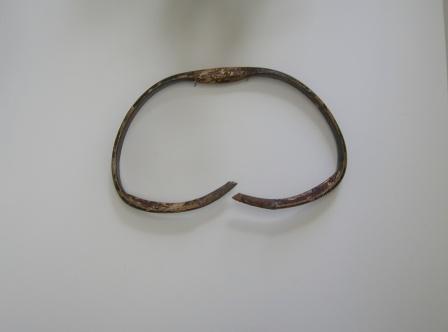 Stringing an extremely curved horsebow How to cheat when stringing a turkish bow the video shows using a kemend, a wide silk belt on a modern hungarian horsebow. the suggested videos on the right offer even more insight. eastern europeans, mongols, arabs, persians, mongols, japanese, etc seemed to prefer lamellar armour with some plate, sometimes out of hardened leather, to the full plate of the west, possibly less protective but more manoeuvrable. also one reason given for the french losing at agincourt was the archers lighter armour allowing them to move around better, especially in the mud. those visors that kept out the arrows were horribly restrictive for breathing, let alone trying to see the little devil with the lead mallet trying to bash you in the helmet. interesting comment on the goose grease. the tests i've seen are all unlubricated. modern armour piercing small arms rounds have a teflon coating to pierce kevlar vests, where similar un-teflonned rounds do not comes to mind. Last edited by kronckew; 25th July 2012 at 04:55 PM. |
|
|
|
|
25th July 2012, 04:57 PM
|
#27 | |
|
Keris forum moderator
Join Date: Aug 2006
Location: Nova Scotia
Posts: 7,297
|
Quote:

|
|
|
|
|
|
25th July 2012, 05:05 PM
|
#28 | |
|
Keris forum moderator
Join Date: Aug 2006
Location: Nova Scotia
Posts: 7,297
|
Quote:
http://www.snopes.com/language/apocryph/pluckyew.asp |
|
|
|
|
|
25th July 2012, 09:32 PM
|
#29 | |
|
Member
Join Date: Mar 2010
Location: York, UK
Posts: 167
|
Quote:
Kronckew, I am impressed by the sheer complexity of those prep and storage arrangements. Can we add simplicity of maintenance and storage to the list of the arquebus/musket's desirable attributes? (I know absolutely nothing about bows - my interest begins at the moment some bright spark worked out that you could propel things into other things with gunpowder, really, and was always given to understand that maintaining a bow in working order was a pretty simple affair. Don't get it too wet, keep the string dry, make sure you don't wrap it round your head, etc.) Edit to add: The Teflon thing seems an interesting aside, though I'm slightly sceptical of it being intended to aid in penetration, unless it does so by reducing friction in the barrel (while still permitting the round to grip the rifling by deformation). Can't imagine it'd do too much to aid in AP properties unless the bullet struck the target at exactly 90 degrees, without deforming at all. Which it may do - terminal ballistics isn't my strong suit either! |
|
|
|
|
|
25th July 2012, 10:41 PM
|
#30 | ||
|
Member
Join Date: Mar 2012
Posts: 422
|
Quote:
But not often allowed in tournaments, so not a military skill one could display in tournament. Get rich by captures in the melee, become a sporting superstar via jousting - what can archery offer in competition with these? Well, they can still go ahead and win archery competitions, and even kings (e.g., Henry VIII) were sometimes noted competitive archers. But that doesn't lead to William Marshal-like riches, or jousting stardom. Sword and lance as THE weapons of the knight, mace as the symbol of authority push the bow to a lower status position. I think at least some of the "un-chivalrous" idea is just modern. But lower status of missile weapons is a foundation for such ideas. Quote:
Compared to storing composite bows in a less-than-ideal climate, a musket is much better. Babur wrote (in Baburnama) that bows only lasted for a few seasons in India, due to the humidity. Not at all good if you want to stockpile them in your armoury - by the time you want to use them, they'll be useless. Muskets will store better. (As will steel bows.) A musket might well have a much longer life than a longbow, when in use. Wood fails with time. Flight bows are sometimes only good for 2-3 shots; military bows are less optimised and last better. But they don't last forever. |
||
|
|
|
 |
| Thread Tools | Search this Thread |
| Display Modes | |
|
|


 Linear Mode

