![]() |
|
|
|
|
#1 | |
|
Member
Join Date: Jul 2008
Location: Germany
Posts: 197
|
Quote:
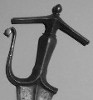
Total length is 95cm . Best Kurt |
|
|
|
|
|
|
#2 |
|
Member
Join Date: Dec 2004
Location: Ann Arbor, MI
Posts: 5,503
|
A.alnakkas
"It looks very small though" Because it is a "Nimcha" :-) |
|
|
|
|
|
#3 |
|
EAAF Staff
Join Date: Dec 2004
Location: Louisville, KY
Posts: 7,397
|
You have a nice nimcha with atypical blade. The hilt material - is it ivory or camel bone and gold?
|
|
|
|
|
|
#4 | |
|
Member
Join Date: Jul 2008
Location: Germany
Posts: 197
|
Quote:
The handle is made of ivory. With 20 carat gold. Kurt |
|
|
|
|
|
|
#5 | |
|
Member
Join Date: Nov 2010
Location: Kuwait
Posts: 1,340
|
Quote:
Can you explain more please? most of the nimchas I have seen ( have 3 personally) have european blades of normal length. I must say though, I like the length on this one, looks vicious! |
|
|
|
|
|
|
#6 |
|
Member
Join Date: Dec 2004
Location: Ann Arbor, MI
Posts: 5,503
|
Most of my info derives from Elgood's book, where he explains that nimcha has a connotation of being small. This one has a feel not of a Moroccan one, but of a South-Arabian ( Oman, perhaps, since they had more sophisticated tastes and were a seafaring bunch). Such swords are quite useless as cavalry weapons and would not be suitable for horse or camel riders, but ideal for sea battles, analogous to european cutlases.
Kurt, it is a beauty!!! |
|
|
|
|
|
#7 |
|
Arms Historian
Join Date: Dec 2004
Location: Route 66
Posts: 10,851
|
Kurt,
Most interesting example . The term 'nimcha' has been most often colloquially applied to the Moroccan sa'ifs which typically have this distinct hilt system. This hilt type with downturned quillons and incorporated upswept knuckle guard developed from probably Italian hilts possibly as early as 16th century, but did not attain wide popularity in the Maghreb until the 17th. The blades on most of the sa'if's in Morocco which we know as 'nim'cha (=Ar. short sword) are interestingly with full length blades, as typically they were from European trade blades readily available in the trade networks to the ports of the North African littoral. Also the well known 'Barbary Pirates' brought materials including blades to these areas. The hilt style on this weapon actually seems Arabian to me, and has strong resemblances to Hadhramauti types of swords (the discs are seen usually in repousse silver karabela type hilts), and the scabbard which along with the mounts seems more modern of course than the blade. The blade resembles earlier European military types of 18th-19th century sidearms and of 'cutlass' type. This incarnation seems to be Ottoman sphere quite likely Arab and recalling the much shorter hanger/cutlass type weapons that were well known in Arabian regions in Ottoman control and favored for maritime use. I know I have seen this hilt (with the peaked extension at top of hilt) and the swirled motif embossed in the leather of the scabbard but need to look further. In the meantime, very nice example Kurt, and hope my thoughts are of some help. All best regards, Jim |
|
|
|
|
|
#8 | |
|
Member
Join Date: Jul 2008
Location: Germany
Posts: 197
|
Quote:
I think like you can see it is typical lether motif of Oman. 18 century ?? Regards Kurt |
|
|
|
|
|
|
#9 | |
|
Member
Join Date: Jul 2006
Location: Buraimi Oman, on the border with the UAE
Posts: 4,408
|
Quote:
Salaams Jim, The Hadramaut is a place I need to go and see... regret however that it is probably 50 years too late. As a compensation I have just read a dusty old mid sixtys copy of Hammond Innes "Harvest of Journeys" where in the first part he is winging around that area which was in part a British Protectorate and in one small town he describes it as totally Javanese!! (at that point the bells are ringing !! ) The (once but in decline) rich Yemeni landlords of Java..In the Hadramaut ! I am still stunned by the revelation. Regards Ibrahiim. |
|
|
|
|
|
|
#10 |
|
Member
Join Date: Oct 2008
Location: Toulouse - FRANCE
Posts: 83
|
Salam Ibrahim,
I do agree with you that Europe is one track among others. It would be appropriate to leave the Eastern door wide open. The Arabs were great traders and great travelers. No doubt that from their settlements in India, Malaysia, Indonesia, Philippines, ... they brought innovations in all areas, including arms. I own exactly the same Nimcha shown by kahnjar1. It is an arab nimcha made in Zanzibar, for Yemen i believe. There are some keys to better recognize the different saïf and nimcha. 1 - the button that blocks the tang: see image (left: zanzibari - right: maghrebi - often a coin) 2 - the profile: see image - from left Saïf - Zanzibari - Maghrebi 3 - the Guard: first image: D Zanzibari guard - Second image: straight guard Maghrebi 3 - the protection against the shots sliding over the flat of the blade image 1: Maghrebi protection (pitones) - image 2: Zanzibari protection. With my kind regards Louis-Pierre |
|
|
|
|
|
#11 |
|
Member
Join Date: Oct 2008
Location: Toulouse - FRANCE
Posts: 83
|
here are the images
LPCA |
|
|
|
|
|
#12 | |
|
Member
Join Date: Aug 2007
Location: CHRISTCHURCH NEW ZEALAND
Posts: 2,831
|
Quote:
If the idea of the hilt shape is sourced from other cultures or not, I guess we in the 21st Centuiry will never know for sure. Many long hours and thousands of words mean nothing without CONCLUSIVE proof, and I suspect that hundreds of years on, we will never be absolutely sure. Sufficient to say, we can only go on information we currently have to hand. Regards Stu |
|
|
|
|
![]() |
| Thread Tools | Search this Thread |
| Display Modes | |
|
|