Sometimes it's interesting to discover that an assumption is wrong.
I always assumed that naval boarding axes came first and evolved into or were repurposed as fire axes as their use at sea declined and fire brigades formed.
The 1859 British Boarding axe is, I have recently discovered, directly copied from a fire axe from around 1807.
Steam and steel rapidly replaced sail throughout the century, but it was not a clear cut change. For example HMS Warrior (1860) was an iron hulled steam powered frigate but she still carried significant sails and with her propellor raised out of the water could make 12 knots under sail. The amount of coal that could be usefully carried restricted her operating range so sail was still necessary for longer voyages.
The above explains why the British Government introduced a new model of boarding axe in the middle of the 19th century and were still supplying them as late as 1898. Axes were needed as although wooden decks may have disappeared there was still a large expanse of canvas, masts, spars and rigging that may be brought down under combat conditions.
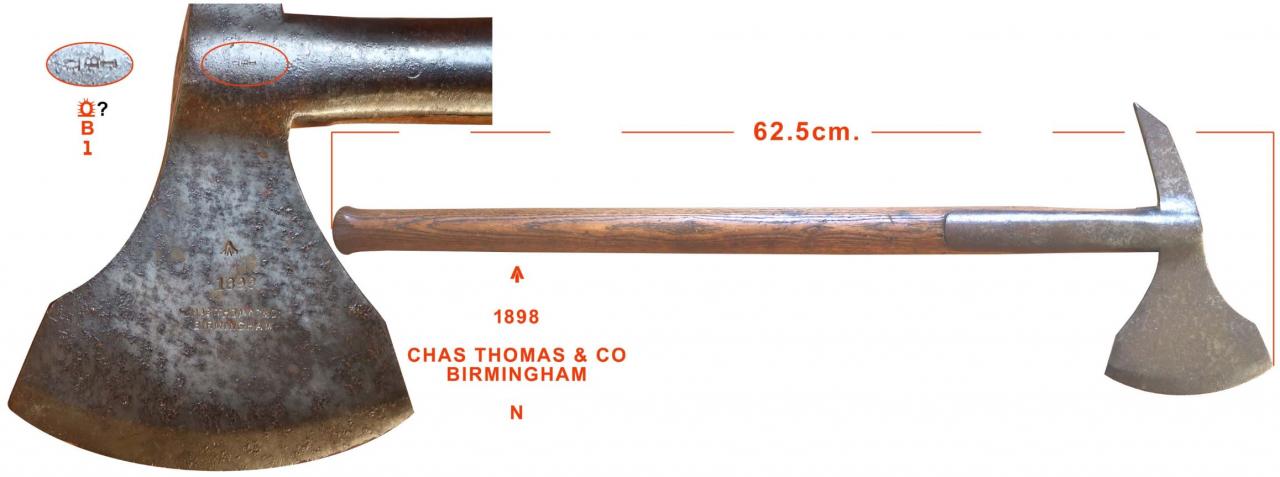
Here is an 1859 model boarding axe made by Charles Thomas (1898):
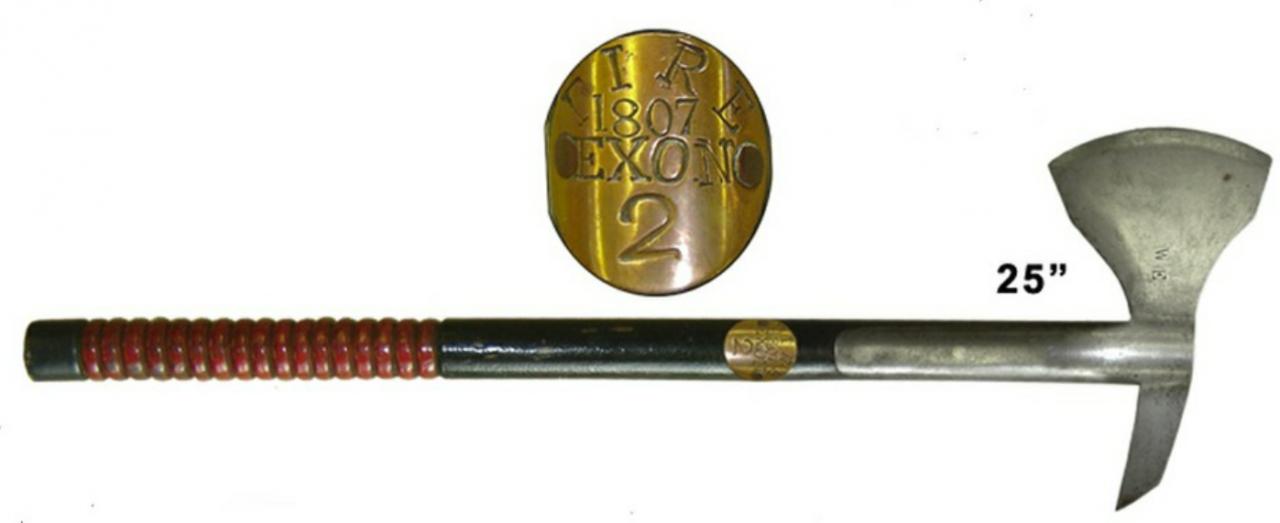
And this the fire axe from which the model was copied.
There are very few extant examples of this fire axe but two are known, marked to the Exeter Fire Brigade and dated 1807. In the early part of the 19th century local fire brigades were established by insurance companies to protect property insured by them. The West of England Fire Insurance Company was set up in 1807 and established several fire brigades in the area. Of which Exeter was one. Exon(iensis) is from the Latin name for the city.
(With thanks to Mr Ron Long an expert on the history of Fire Fighting equipment.)